From climate change and extinction to groundwater depletion and chemical pollution, human activity is now transforming the Earth on a geological scale with potentially catastrophic consequences for civilisation and life itself.
A farmer digging a well in his field to water his crops seems unlikely to knock the planet off its axis. But a billion farmers in a billion fields, aided by teeming cities, took just 17 years to work such a feat: extraction of the Earth’s groundwater has shifted the global axis by 78 centimetres.
The displacement of two trillion tonnes of groundwater between 1993-2010 is the latest proof that humans are less a species of animal than a geological force of nature, reshaping the planet in a myriad of potentially disastrous ways.
That cometary impact sent vast shock- and heatwaves rippling round the Earth, incinerating or flattening forests and animals. Giant tsunamis swept the coasts. Huge clouds of pulverised rock, molten metals, toxic gases, CO2, smoke and dust enshrouded the planet, throwing it into an instant ice age lasting centuries. Plants and algae died, robbing the air of breathable oxygen. Seas and lakes became acidic and dead. The combination of cold, dark, acidity and starvation was the true killer of the dinosaurs.
Today humans are reshaping the planet no less profoundly – and likely with similar consequences for all life, ourselves included, as the following cases illuminate.
Climate change driven chiefly by our burning of fossil fuels and land clearing will take the planet up by +4 degrees by 2078 – and the natural release of methane this is triggering may add a further +5-10 degrees. This will destroy most plant and algal life, along with traditional human food production. In essence around 200 million years’ worth of buried carbon from long-dead lifeforms is being disinterred by humans in a matter of decades. We are exhuming the teeming dead.
The 6th Extinction. Land clearing for farms and cities, combined with a hyper-toxic man-made chemical assault, overhunting, the spread of deserts and ruined wastelands is taking down the Earth’s life support system. Over 48,600 species of animals and plants face extinction in the near term, and many more soon after. The rate of extinction is between 1000-10,000 times higher than normal.
Global poisoning. Each year humans release 220+ billion tonnes of substances in a chemical attack on ourselves, our children and all life on Earth. This assault is now linked by medical science to 14 million deaths and 600 million disabilities a year as well as to spreading infertility, noncommunicable disease and loss of intelligence. It has also been linked to the vanishing of insects worldwide, the decline of birds, frogs and other species that feed on them. It is saturating our bodies and minds with plastic fragments. It is having a biogeochemical impact on the entire planet as yet unquantified by science.
Desert march. Of the world’s entire land area, 46.2 per cent is being silently turned to desert by human action, directly impacting 500 million people and affecting 3.2 billion. The worst effects are in South and East Asia, Central Asia, the Middle East and North Africa, Sub-Saharan Africa, Central and South America. Desertification costs the world economy about 10 per cent in losses a year. We are the most erosive animal ever to live.
Forest loss. When the metal axe was invented forests cloaked 57 per cent of the land. Today they cover 31 per cent and the remnant is badly thinned and damaged. Some 420 million hectares of forest have been lost since 1990 and 10 million more are now lost each year. Along with the forests are lost their wildlife, their capacity to absorb carbon from the air, their hold on the soil and their ability to pump new oxygen into the atmosphere, to keep the Earth habitable for humanity.
Oxygen depletion. Slowly, steadily, humans are removing the oxygen from the air we breathe and the oceans that sustain life on Earth. Every carbon atom we burn robs two oxygen atoms from the air. This subtle change affects all living animals on the planet. A natural decline has been speeded up by the burning of fossil fuels. Today the atmosphere holds just under 21 per cent oxygen, declining by 4 ppm a year. When it passes 17 per cent, the Earth will become uninhabitable by humans.
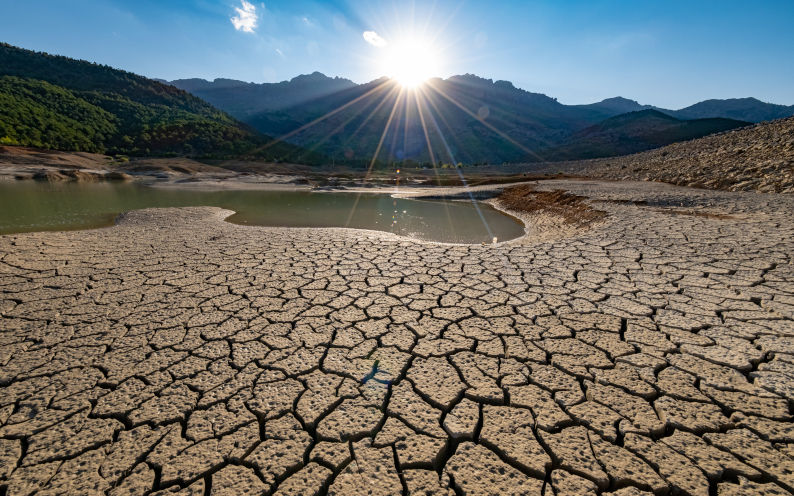
Water scarcity. Large regions of the Earth are already ‘water bankrupt’, meaning they no longer have enough fresh water to sustain either their human population or nature. Fresh water is a finite resource but human demand for it is unbounded, leading to colossal overextraction and the death of landscapes. Rivers are dying and glaciers melting across the globe. Pumping of groundwater is adding to sea-level rise, which is salinizing coastal water supplies.
These are examples – but by no means the entire list – of potentially disastrous human impacts on the Earth and the life it sustains. Over time, they will collectively render it uninhabitable for our species, along with most others.
Scientists have coined a term to describe our age, when humans have a profound geological impact on the entire planet: the Anthropocene. However, a long Greek word is unlikely to sway the behaviour of ten billion humans.
Only the insight that we are destroying our own children’s chances of survival can do that.
The problem is that the average person has neither the education nor the empathy to perceive how their own tiny contribution to making the Earth uninhabitable affects the whole planet, even when multiplied by 8.3 billion. The 12 kilos of soil and 950 litres of water used to feed each person every day. The 12 tonnes of materials they don’t really need, to support a modern lifestyle. The long trail of poisons, burnt fuel, lost water and plastic waste they leave in their wake over a lifetime.
Meanwhile the high priests of economics and commerce continue to spruik the fantasy that the Earth is infinite, will never run out of resources or wildlife, and can absorb all the damage we inflict on its life support systems. Human greed, these false prophets declare, is the only answer – despite the misery, suffering and harm it plainly causes.
There is only one answer to the catastrophic impact which the human comet is having on the Earth. It is for us to grow up and take responsibility for its state of health. To become true Earth Citizens, dedicated to its regeneration, instead of feuding tribes of savage rodents mired in a nineteenth century conception of progress.
To begin this process we need two things:
1. A global agreement to try to create a habitable Earth in which our children can survive. Like the Earth System Treaty, for example. Unless we agree to survive, we probably won’t.
2. A world plan of action to tackle all of the threats to our future simultaneously – because they are interlinked.
We owe it to our children, and to theirs, and to theirs for all time to come. If you think this is important, speak up here.

Julian Cribb AM is an Australian science writer and author of six books on the human existential emergency. His latest book is “How to Fix a Broken Planet” (Cambridge University Press, 2023)