
As the Productivity Commission begins its second Closing the Gap review, the question is not simply whether Indigenous voices are being heard, but whether governments are willing to share the authority, resources and decisions needed to turn consultation into meaningful change.
Earlier this month, the Productivity Commission invited Australians to contribute to its second review of the National Agreement on Closing the Gap. Written submissions, stories, artwork, videos and research are all welcome. The commission wants to know what is working, what is not and what governments must do differently.
The invitation is important and should be welcomed. Listening matters. But it also exposes an uncomfortable paradox. Indigenous Australians are again being asked why a policy system already committed to partnership and shared decision-making has delivered so little structural change.
Australia may now consult Indigenous people more often than at any previous point in its history. Yet consultation can leave power exactly where it was. Governments may listen respectfully, acknowledge what they have heard and thank communities for contributing, then retain control over the questions, the money, the timetable, the evidence and the final decision.
The challenge facing Closing the Gap is therefore no longer simply how to hear Indigenous voices. It is how to build institutions willing to act on those voices, especially when doing so requires governments to share authority they have long kept to themselves.
A useful way to test whether a partnership is real is to follow five decisions.
First, who defines the problem. Too often, governments arrive with the diagnosis already written: poor attendance, family dysfunction, unemployment, violence or ill health. Communities are invited to comment on the proposed remedy, but not to question whether the problem has been properly understood.
The second is who controls the money. A community may help design a program yet remain dependent on a department deciding how much to spend, what to spend it on, and how long the funding will last. Advice without influence over resources is power of a very limited kind.
The third is who delivers the response. Are Indigenous organisations trusted to lead, employ local people and adapt the work as circumstances change? Or are they brought in mainly to make an externally designed program appear culturally appropriate?
The fourth is who decides what counts as evidence. Governments understandably require measurable results. But numbers alone may miss changes communities recognise as fundamental: greater confidence, stronger relationships, renewed cultural connection and an increased capacity to resolve problems locally.
The fifth, and often most neglected, is who decides what happens next. When a program shows promise, can the community sustain, adapt and expand it? Or must it wait for another funding round, another external review and another ministerial decision?
A partnership that leaves all five decisions with government may involve extensive and respectful consultation. But it is not shared decision-making. The test is not how many Indigenous voices were heard. It is whether hearing them changed who had the authority to act.
Megan Davis and Gabrielle Appleby recently argued on P&I that one reason the Voice referendum failed was that the government did not sufficiently respect the long Indigenous process that produced it. Important decisions about timing, wording and campaigning were made without properly engaging those who had spent years developing the proposal. Their larger warning is that, without durable representative institutions, Indigenous participation remains dependent on governments’ willingness to listen.
That lesson extends far beyond the referendum. Every year, governments make hundreds of decisions affecting Indigenous health, education, justice, employment and community development. Most never attract national attention. Together, however, they determine whether Indigenous Australians are treated as people with authority or as recipients of policies designed elsewhere.
After three decades of working with Indigenous organisations, I have come to recognise a recurring pattern. Institutions are often willing to hear what communities think. They are much less willing to surrender any of the decisions that matter.
In 2001, I argued that making research relevant to Indigenous aspirations required more than conducting studies in Indigenous communities. Communities needed the capability to influence the questions, participate in finding the answers and use the resulting knowledge for their own purposes. Otherwise, even well-intentioned research could leave the relationship between researcher and researched largely unchanged.
Later work on the social determinants of Indigenous health reinforced the importance of control. Health is shaped not only by income, housing, education and access to services, but also by whether people can influence the forces affecting their lives. A person repeatedly told what is wrong, what must change and which program will be provided may be receiving assistance while simultaneously being denied agency.
The Aboriginal-developed Family Wellbeing program showed me what an alternative can look like. Its purpose is not to tell people how to live. It helps participants identify their priorities, strengthen relationships, make decisions and act collectively. Employing local facilitators and community-based researchers also helps ensure that capability remains within the community rather than departing with outside experts.
None of this means governments should simply hand over public money and walk away. Communities, like governments, contain competing interests, unequal voices and internal disagreements. Representation must be legitimate. Funds must be accounted for. Programs must protect human rights and demonstrate results.
But accountability should travel in both directions. Communities should account for the responsibilities and resources entrusted to them. Governments should account for whether they honoured agreements, provided adequate time and funding, responded to evidence and explained decisions that rejected community advice. Sharing power requires stronger governance, not an absence of governance.
The Productivity Commission therefore has an opportunity to ask more than how many meetings occurred, how many submissions were received or whether Indigenous representatives were present. It can examine which decisions governments actually shared, and what happened when Indigenous partners disagreed with them.
Australia does not lack Indigenous advice. It lacks durable arrangements for acting on that advice when it challenges established power. The next phase of Closing the Gap must ask a harder question: not simply whether Indigenous people were heard, but what they were trusted to decide.
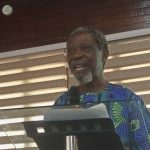
Komla Tsey
Komla Tsey is a Ghanaian–Australian writer, retired Professor of Education for Social Sustainability, and part-time Professorial Research Fellow at the Jawun Research Institute, Central Queensland University. His writing explores education, democratic culture, identity, Indigenous empowerment, colonial legacies and the moral certainties that shape public life. His forthcoming memoir, Botoku Child, traces a journey from a small village in Ghana to universities and communities across the world, examining how inherited beliefs, curiosity and lived experience shape both personal lives and democratic societies.