This is the final in a series of three articles examining how the Hormuz closure is reshaping energy, governance and inequality across Asia and the Pacific.
At the time of writing, tanker traffic through the Strait of Hormuz is running at about 5 per cent of the pre-war rates — from around 3,000 ships per month to 154 recorded in March. The restoration of that supply will continue to be the focus of media and policymakers. Yet recovery in Asia and the Pacific is no longer tied solely to the Strait of Hormuz, as the crisis has set in motion a sequence of consequences of differing likelihood and scale and with different timelines.
Understanding which of those consequences might be irreversible, which are still contingent and what they mean for the region’s economic and governance landscape over the coming years requires disaggregating what ‘after’ actually means.
When physical supply is normalised – that is, when fuel begins arriving again at volume – recovery will start. For some countries, this has already commenced. India has deployed warships to successfully escort several oil tankers through the strait with permission from Tehran. Pakistan, too, secured transit for a small number of tankers. For countries that secured no such access – including Bangladesh, Sri Lanka, Vietnam and the Pacific Island states – the restoration of physical supply will depend entirely on the whole system starting up again.
Price normalisation is likely to be slower. Additional costs such as insurance premiums and elevated freight rates will persist for some time, independently of whether the strait is formally open. Market analysts warn that, even if it reopens quickly, disrupted oil supply chains will take months rather than days or weeks to return to normal. For Fiji, this distinction is particularly troubling. There, the Reserve Bank warned that upcoming fuel-price reviews could translate into an almost 50 per cent jump in domestic fuel prices, meaning that for many Pacific Island economies, the first phase of post-crisis recovery will coincide with sharp price increases rather than a period of relief.
Perhaps an even slower track will be the return to pre-crisis growth levels, food prices, remittance flows and tourism numbers, which in some cases may not fully occur. The disruption to fertiliser supply chains that began in early March will likely not fully manifest until the second half of 2026, when harvest yields across South and Southeast Asia will reveal the extent of the damage from disrupted planting seasons. Whether yield losses are modest or severe, the food price and food security consequences will arrive at a moment when household incomes are already compressed by months of elevated transport and energy costs.
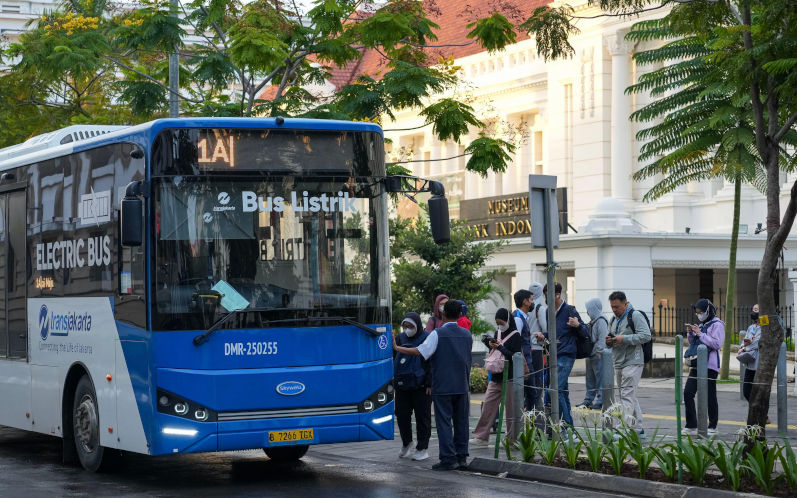
All this shines a light on the elephant in the room: the extent to which the crisis might contribute to the institutional, financial and political conditions needed for a shift away from fossil-fuel dependence. Alternatively, the dominant response could be a managed return to the pre-crisis energy architecture once the strait is functioning again. The signals are mixed. In Pakistan, demand for electric motorbikes soared in March, while the prime minister chaired a meeting on energy security in late April, declaring a target of 30 per cent electric-vehicle adoption by the government in five years. In April, the Cambodian government cut import taxes on electric vehicles. The Thai government is increasing incentives and streamlining approval procedures to stimulate the purchase of residential rooftop solar systems.
The political economy of energy transition in the Asia and Pacific region has historically been shaped by the relative cost and convenience of fossil fuel imports. This crisis has altered that calculus significantly – and the evidence of the past two months suggests it is doing so not only at the level of government policy declarations but also at the household level. Whether governments treat these elevated energy security risks as merely an exceptional event to be managed and then forgotten is yet to be determined. Some policy signals suggest the crisis might also accelerate the energy transition, particularly if the structural weaknesses it has exposed become too difficult to avoid.
What is clear is that the distribution of harm in a supply shock is not determined solely by the shock itself but by the conditions in place before the shock arrived and the governance capabilities in place to respond to it. These include the reserves accumulated, social protection systems, diplomatic relationships, administrative capacity and incentives. Countries that had developed those – even partially or imperfectly – have been able to deploy them. Countries that had not have been left to wait. While the legacies of this crisis will vary significantly country by country, they are likely to shape the energy-policy environment for months, if not years, to come. Whether that’s for the better remains to be seen.
Read Part 1:
Read Part 2:
Republished from Dev Policy Blog
Disclosure This article is published as part of the Development Policy Centre’s collaborative relationship with The Asia Foundation.

Nicola Nixon
Dr Nicola Nixon is Senior Director, Governance at The Asia Foundation and is based in Hanoi, Vietnam.

Kazi Faisal Bin Seraj
Kazi Faisal Bin Seraj is Country Representative of The Asia Foundation in Bangladesh, based in Dhaka. He previously worked for BRAC International and served as TAF Country Representative in Myanmar.