P&I today begins a major new series – rethinking Australia’s foreign policy. The United States is becoming more erratic and less reliable, and Australia must respond by insulating itself – strengthening regional ties, rethinking defence settings, and reducing strategic dependence, according to John Menadue.
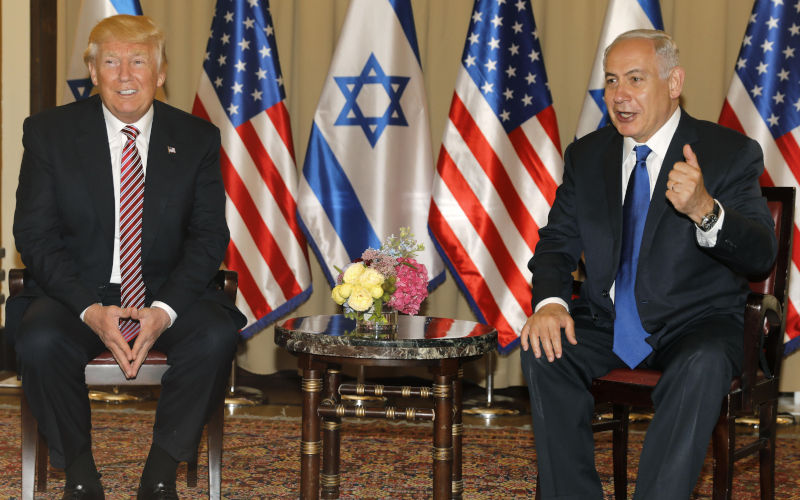
Trump and Netanyahu are the most dangerous persons on the planet. US policy in the Middle East is not driven by oil. It is driven by Netanyahu. And allies in the Gulf are paying a very heavy price for allowing US bases on their soil. The same fate might be ours with northern Australia becoming a US military colony.
Trump defaces almost everything he touches. His behaviour and language suggest psychological disturbance. Penny Wong speaks of a “much more unpredictable US”. And so does Andrew Hastie, telling us that the Iran war is “a huge miscalculation” by Trump.
Trump’s damage is likely irreversible. The US does not negotiate in good faith any more, as the Iranians have found three times over nuclear issues.
We need regime change in Washington more than Tehran. But in the meantime, we must minimise risk. Appealing or sucking up to Trump will not work. He bullies the weak and confronting him will provoke a dangerous tirade as the Europeans have found.
A change in our relationship with the US should not be couched in terms of our rejection but Asian engagement. Or, as I read recently, countries such as Australia should insulate rather than isolate themselves from the United States. Prudent risk management may be an even better description.
To propose US rejection would immediately lead to predictable attacks from our media which is a platform for Washington’s view of the world. Our intelligence, defence agencies, and think tanks also have a vested interest in the American alliance. They have been on the Washington drip feed for so long – mainly through the Five Eyes – that they cannot envisage Australia as other than a locked-on vassal of the CIA.
There has been a shift in Australian attitudes towards the United States. Recently the US Study Centre found that only 16 per cent of Australians think that Trump’s second term has been good for Australia. In 2025 only 42 per cent of Australians believe that the alliance makes Australian more secure. This is a 13-percentage drop from 2024 and the lowest level since USSC polling began in 2022. Nearly one third of Australians now believe the alliance makes us less secure, a figure that has almost doubled since 2024
The government must lead a public discussion about insulating ourselves from the US. Penny Wong has articulated for us a way forward in her proposal of the four Rs – Region, Relationships, Roles and Resilience – in which the US alliance rather than being a foundational pillar is embedded within a wider web of diversified partnerships with regional relationships elevated to equal importance.
What can we do to insulate ourselves from US folly?
We mustn’t waste a good crisis. They provide an opportunity to lay down new markers. We should have rejected Trump’s Board of Peace for Gaza quickly, wholeheartedly supported Canadian Prime Minister Mark Carney’s speech on the role of middle powers, and dissociated ourselves immediately from the folly of the Israeli-inspired US attack on Iran.
US bases
We have a swarm of US bases on our soil. The most significant is Pine Gap, which is currently very active in supporting Israeli attacks in Gaza and US attacks on Iran. As Richard Tanter wrote, in September 2024 one of the key US corporations supplying personnel for NSA operations at Pine Gap advertised for a Farsi speaking US citizen for a top secret role working from Alice Springs with the US military in the Persian Gulf.
No doubt that person and other Farsi speakers were critical in the US attack on Iran.
We should insist that Australians have access to all signal intelligence at Pine Gap. No signal intelligence – no bases.
The ALP platform is clear, “Labor’s defence policy is founded on the principle of self-reliance. Australia’s armed forces need to be able to defend against credible threats without relying on the combat forces and capabilities of other countries”.
Does that policy now guide the Labor government? Will we just get weasel words at the next ALP Conference in Adelaide?
What can be done to minimise the risk of these US bases?
We could, as the Spanish Government has done, bar the use of US bases without our permission. We would need to make that clear in advance, particularly over Taiwan. It would be too late once the shooting starts. There is a good precedent. In Parliament on 3 March, 1981, Malcolm Fraser said “the Australian government has a firm policy that aircraft carrying nuclear weapons will not be allowed to fly over or stage through Australia without its prior knowledge and agreement. Nothing less than this would be consistent with the maintenance of our national sovereignty.”
We could insist that US bases cannot be used for illegal purposes or in breach of our commitments to the UN Charter.
The War Powers Reform group has urged our parliament to legislate, requiring both Houses of Parliament to vote before our troops or bases can be used in hostilities. A poll by Essential Research in April 2023 found that 90 per cent of those surveyed thought parliamentary approval should be required to go to war.
AUKUS
It will be politically difficult, but we must find a way to exit from AUKUS. The cost is horrendous for submarines that will be too late, may never arrive, and are not for the defence of Australia. A comprehensive review of defence including AUKUS would be useful. We had an ANZUS review in 1983.
We cannot fund $360 billion for AUKUS – the equivalent of six times our annual defence expenditure – and develop at the same time a self-reliant defence posture. Trump may even welcome the end of AUKUS to provide relief to US shipyards.
Investing in our region
We need to actively engage with our own region, something we’ve talked about for decades but have never seriously embraced. We are often seen as a western outpost with a British Head of State.
The new alliance with Papua New Guinea and the renewed defence cooperation treaty with Indonesia are very welcome. The latter is a reinstatement of a very similar treaty that Paul Keating negotiated with President Suharto in 1995.
No strategic or defence relationship is more important than our relationship with Indonesia. That relationship must anchor our regional relations.
We need to significantly lift our diplomatic capabilities in Asia. For far too long our intelligence, security and defence personnel have dominated advice to governments. US focused, they have a lot of information but poor judgement. We should not be led by the nose by the Five Eyes.
Our successes in APEC, Cambodia and East Timor show our diplomatic capability when associated with strong ministerial leadership, as we had with Keating and Gareth Evans.
The current fuel crisis points the way for more active collaboration with countries in our region. Too often we wait for a cue from the US.
Unfortunately, we are less Asia-ready then we were 30 years ago. At the time of the Hawke-Keating governments we were making progress in Asian language learning, media interest in Asia and cultural exchanges with Asia. But Asian language learning and education funding at university is collapsing. The national policy on Asian languages has run into the sand. Our legacy media, including the ABC, is still embedded in our historical relationships with the UK and the US.
Our retreat from Asia has become a rout. It requires urgent attention
China
We must develop a more constructive relationship with China, particularly in such fields as renewable energy and regional trade – for example the Comprehensive and Progressive Agreement for Trans-Pacific Partnership (CPTPP) which is a major multilateral free trade agreement between 12 countries does not include China. The US has withdrawn.
We ignore China’s Belt and Road initiative which now includes more than 150 partner nations. BRICS was founded by, India, Brazil, South Africa, China and Russia. Other members now include Indonesia and Egypt.
As Chandran Nair has proposed we need to explore other China initiatives. China has proposed a Global Governance Initiative aimed at reforming global governance to make it more just, inclusive and effective. As part of this, it has established a “Group of Friends of Global Governance” at the UN, comprising 43 founding member states, intended to work within and strengthen the UN-centred system.
This is but one of many recent initiatives that China has proposed.
As Chandran Nair has described our China challenge on P&I, “given China’s size, scale and vast potential, its rise will inevitably generate challenges…. An inter civilisation dialogue between China and the rest of the world is not only an imperative for academics but critical for world leaders and thinkers striving towards a more peaceful world.”
Many countries may not want to be like China. But they know that China shows respect and listens. China has a vision for the future, but the West doesn’t.
At the same time, we must insulate ourselves from the erratic behaviour and decline of our “dangerous ally”
Incrementalism and managerialism won’t cut it. It requires boldness and courage. With a large majority, the Albanese government has a lot of political credit in the bank. Is it prepared to spend it?
Tomorrow in Rethinking Foreign Policy Kym Davey says the upcoming ALP National Conference is the opportunity for the Labor rank and file to demand a fit-for-purpose defence and foreign policy.

John Menadue is the Founder of Pearls and Irritations and a board member. He was formerly the Editor-in-Chief. John was the Secretary of the Department of Prime Minister and Cabinet under Gough Whitlam and Malcolm Fraser, Ambassador to Japan, Secretary of the Department of Immigration and CEO of Qantas.