Public education’s advocates have become too comfortable with polite negotiation. When governments fail schools and students, speaking out isn’t disloyalty – it’s part of defending them.
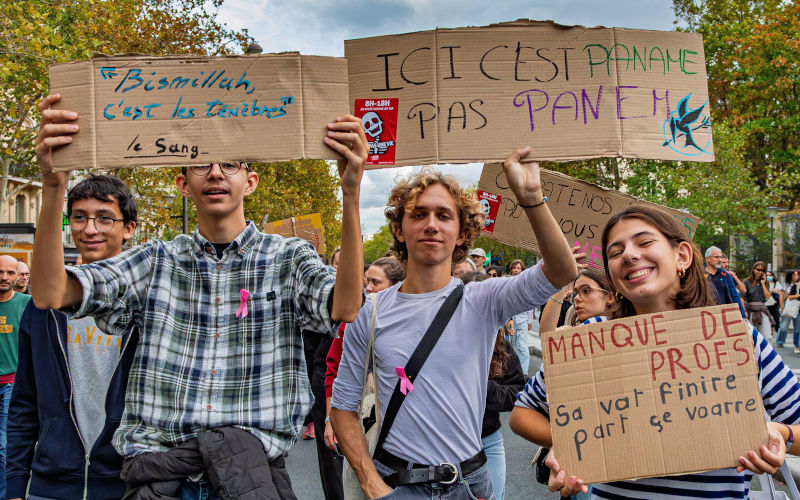
Australian public education might usefully study the French. Not the language, but the willingness of citizens to take to the streets when governments fail them.
Not all French protest is admirable, and violence has no place in my argument. But beneath that tradition lies a sound principle: when governments fail to respond to legitimate concerns, citizens have the right to make their dissatisfaction visible.
Australian public education seems more comfortable with diplomacy. We write submissions, attend meetings, cultivate ministers and celebrate incremental gains. Some of this has produced real outcomes.
But a question needs asking.
Have we become so protective of public education’s reputation that we are reluctant to challenge publicly those responsible for its condition?
The discomfort of criticism
Those who have given their working lives to public schools know the extraordinary work done in them, and know too that criticism of public education can be exploited by those who favour private schooling. Consequently, criticism is readily heard as disloyalty, even when directed not at schools or teachers but at the policies that constrain them.
I was reminded of this recently when a headline placed ‘public education’ at the centre of an essay of mine actually about the decline of a single subject, drama. I was taken to task for damaging the public sector and, by extension, assisting the private one.
The distinction lost in that reaction matters enormously. Criticising a government for inadequate resourcing is not criticising the schools struggling without it. Exposing a system’s deficiencies is not an argument for abandoning it. It may be the best way of defending it.
An uncomfortable truth is no less true because opponents may exploit it. If those who understand public education best fall silent about its difficulties, who will speak for the children living with the consequences?
The limits of soft diplomacy
There is much to be said for diplomacy. Access creates opportunities for influence. Confrontation can provoke defensiveness where private discussion might win cooperation. Principals’ employment conditions can make public criticism personally costly. Those who prefer negotiation are not necessarily timid; many have won improvements through patient engagement.
But diplomacy works only when those holding power have reason to respond. When the political cost of inaction is modest, representations can be politely acknowledged and quietly shelved.
More troubling is the way access can become an end in itself. An advocate anxious to keep a seat at the table may find it ever harder to challenge what is decided around it. No principle is consciously abandoned; it simply erodes through a succession of reasonable compromises.
This is, ultimately, a question of loyalty. Are we protecting our relationships with those at the top, or advocating for those at the bottom whose opportunities depend on decisions made there?
Usually the two can coexist. When they cannot, which comes first?
The children who cannot wait
Consider the Victorian school funding agreement, under which the agreed full funding benchmark is not scheduled to be reached until 2034. Ministers celebrated, and the negotiators can point to a significant commitment.
Now consider what 2034 means to a child.
A student who entered Year 7 this year will have left school well before the promised funding arrives. A child who started school this year will have spent most of their primary education in a system governments concede is under-resourced.
This is not simply about money. Years without adequate learning support, specialist assistance or a broad curriculum leave damage later spending may never repair. Children do not suspend their development while governments negotiate, and a missed opportunity to discover a talent or experience belonging can alter the direction of a life.
The costs of delay fall unequally. Ministers can wait. Departments can wait. Advocacy bodies can keep negotiating.
Children cannot wait
When governments celebrate agreements that acknowledge what schools need while another generation completes its education without those resources, is polite appreciation an adequate response? Or should such announcements be met with peaceful, sustained public demonstrations demanding urgency?
Who does the bureaucracy protect?
Departments must implement policy, but they also have a responsibility to provide frank professional advice about its consequences for schools. The difficulty arises when protecting the reputation of the minister or department begins to compete with representing schools’ needs honestly.
Public schools deserve far more celebration than they receive. But promotion must never substitute for acknowledging deficiencies. Encouraging principals to tell positive stories about their schools is reasonable. Encouraging them to pretend all is well while serious problems remain is something quite different.
This is no reflection on the many conscientious departmental officers. The question is whether the institution encourages frank professional judgement or discourages it.
No education system should require its principals to choose between loyalty to their employer and honesty about their students’ needs.
An institution that treats criticism chiefly as a threat risks spending its energy managing appearances, preserving its equilibrium while losing the capacity to fulfil its purpose.
From palliative care to radical surgery
Imagine a patient with a serious but treatable condition. The doctors know the treatment required yet repeatedly postpone it, while managing symptoms and celebrating modest improvements. Eventually, symptom management begins to pass for a treatment plan.
There is an uncomfortable parallel with public education.
The patient is not terminally ill. The condition is treatable. But the treatment is being delayed, and we risk becoming skilled at administering palliative care when the circumstances call for radical surgery.
That surgery requires more than funding, indispensable as timely funding is. It means examining how resources are distributed, how disadvantaged schools and children with severe behavioural and developmental needs are supported, and how those responsible for policy are held accountable for its consequences.
It means challenging institutions that may have become better at protecting themselves than at serving those they exist to support.
Protest alone will not achieve this. Negotiation and expertise remain essential. But we should not assume they will deliver urgent change without sustained public pressure.
An invitation to debate
The French do not have all the answers, and their protests include excesses no responsible advocate would imitate. But they remind us that peaceful public dissent is a legitimate part of democratic life, not an act of disloyalty.
Perhaps Australian public education needs to become more comfortable with that proposition.

John Frew worked in public education, including as foundation principal at a secondary school for students with Conduct Disorder and Oppositional Disturbance. John has authored numerous books the latest being ‘Neuroscience and Teaching Very Difficult Kids’. Since retiring, he has continued to comment on social issues.