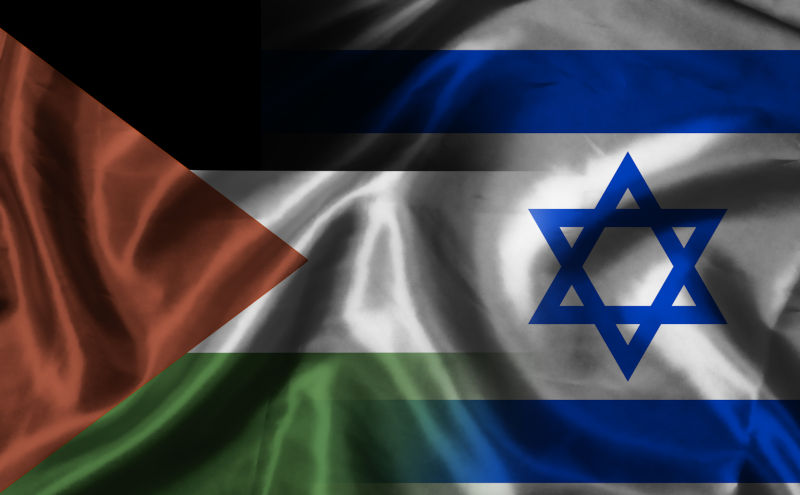
The conflict in Gaza that has fuelled antisemitism and Islamophobia is spilling into everyday life. People are starting to blame individuals and communities for the actions of governments or armed groups. This is dangerous.
Something has changed in the way ‘conflict’ is showing up, not just in the Middle East and not just in headlines, but in streets, workplaces, universities and online. It now reaches into everyday life and touches people far beyond where it began.
Since October 7 and the genocide in Gaza that followed, there has been a rise in antisemitic incidents in many countries and, at the same time, a significant rise in Islamophobic occurrences, reported across the world with the same pattern of escalation.
Underneath, something damaging is happening: people are starting to confuse whole communities with the actions of governments or armed groups.
Jewish people are treated as if they’re all responsible for what the Israeli government does, while Muslims, Arabs and Palestinians are treated as if they are responsible for the actions of Hamas or other militant groups, even though people within those communities and around the world hold a wide range of views about them. Most of the time, that assumption is simply wrong.
Most Jewish people have no control over Israeli government decisions; most Muslims and Arabs have no connection to Hamas or any armed group; most Palestinians are simply trying to survive in a situation they didn’t choose. But in moments like this, those distinctions start to disappear.
When they do, people pay the price. A student is questioned because of their identity, someone is treated differently at work, a family feels less safe in public, a stranger makes a judgement on a train or in a shop based on a label, not a person.
It doesn’t always look like open hatred. Sometimes it looks like suspicion or distance or just a moment when someone is no longer seen as an individual. That shift happens quietly, not because people set out to be unfair, but because anger and fear are looking for somewhere to go and, in the absence of clarity, they attach themselves to whatever is visible. A symbol becomes a shortcut, a group becomes a stand-in, and individuals get caught in between.
This is what makes moments like this so dangerous. It’s not only that people are arguing about a war, a genocide; it’s that the argument doesn’t stay there. It spills into daily life, far away from the conflict itself. Once that happens, it becomes very hard to undo, because you can’t ask a whole community to constantly prove they are not responsible for something they never controlled, and you can’t build fair conversations if people have to defend their basic safety just for existing in public.
This isn’t about whether we should speak about Gaza, or October 7, or the wider history behind it. It’s about these real events right here that absolutely matter. The issue is whether we can talk about them without turning entire communities into stand-ins for blame. Once the line is crossed, the ‘conflict’ is no longer only happening there, it starts happening everywhere people live alongside each other. That’s dangerous.
Meg Schwarz
Meg Schwarz holds a Postgraduate Diploma in Counselling and Psychotherapy and brings over 35 years of experience championing social justice, advocacy and consumer engagement. Based in South Australia, Meg has dedicated her career to working alongside diverse communities, including refugees, people with disabilities and individuals with complex trauma backgrounds.With a strong passion for equality and human rights, Meg specialises in fostering meaningful communication, empowering voices through advocacy and creating inclusive spaces for dialogue. Her skills in stakeholder engagement, strategic communication and community development have earned her recognition as a trusted and compassionate leader in her field.