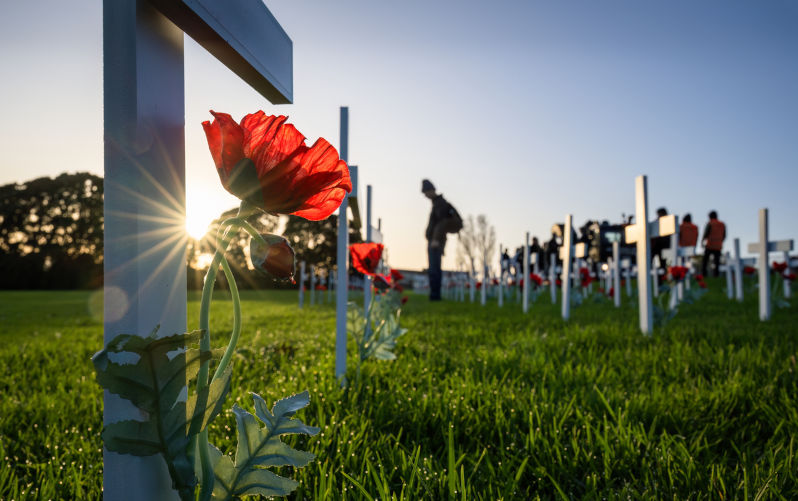
ANZAC Day honours service and sacrifice, but its deeper meaning lies in recognising the human cost of war and the responsibility to learn from it.
The 25 April was ANZAC (Australia and New Zealand Army Corps) Day, a national occasion that began by commemorating Australian and New Zealand soldiers who served and died in the First World War and which now honours all those who have served in wars, conflicts and peacekeeping operations.
My grandfather fought in the First World War.
My father served in Papua New Guinea during the Second World War.
I carry an immense sense of pride in both of them and in the ANZAC tradition that has shaped so much of who we are.
“Lest We Forget” is something many of us say each year, but for me, it’s more than words repeated on a single day. It’s a remembrance of sacrifice, yes, but also of the unimaginable loss, devastation and human cost that came with those and other wars.
We honour courage.
We honour service.
We honour those who stood to protect others.
However, we should also remember this: war isn’t glorious. It’s not something to be repeated or romanticised. It’s something that tears families apart, changes lives forever and leaves scars across generations.
ANZAC Day, to me, isn’t only about looking back, it’s about looking forward.
While ANZAC Day is part of our history, I know people around the world honour their own days of remembrance, each shaped by their own stories of sacrifice and loss. The details may differ, but the meaning is shared.
If “Lest We Forget” means anything, it must also mean “Never Again.”
That’s where the challenge lies.
When we look at the world today, we don’t see a world that has fully absorbed that lesson. We see war continuing in places like Ukraine, where lives are still being lost in a prolonged conflict. We see immense human suffering in Gaza, where civilians have endured devastating violence and grief. We see conflict in Sudan, largely out of the international spotlight, yet producing one of the worst humanitarian crises in the world today.
These are very different conflicts, with different histories and contexts, but they share something that should be painfully familiar: ordinary people bearing the cost of war.
So when we say “Never Again,” we can’t mean only the wars of the past. We must also be willing to confront the wars of the present.
Remembrance alone isn’t enough.
Acknowledging history matters, but learning from it matters more.
We owe it to those who served not just to remember their sacrifice, but to carry forward the deeper message: to strive for a world where such sacrifice is no longer required and where the warning signs of conflict are not ignored.
So today, I and so many others, remember with pride.
We reflect with honesty and, I hope, with purpose.
Lest we forget, but also, let’s not fail to act on what we remember.

Meg Schwarz
Meg Schwarz holds a Postgraduate Diploma in Counselling and Psychotherapy and brings over 35 years of experience championing social justice, advocacy and consumer engagement. Based in South Australia, Meg has dedicated her career to working alongside diverse communities, including refugees, people with disabilities and individuals with complex trauma backgrounds.With a strong passion for equality and human rights, Meg specialises in fostering meaningful communication, empowering voices through advocacy and creating inclusive spaces for dialogue. Her skills in stakeholder engagement, strategic communication and community development have earned her recognition as a trusted and compassionate leader in her field.