
US child health has deteriorated across more than 170 measures. The deeper warning is that children’s physical, nutritional and social environments are changing faster than their developmental needs.
The health of America’s children has undergone a disastrous decline in the last 20 years, according to 170 different measures, a new report has found. But the concern is not confined to the USA: in the digital age, it applies increasingly to childhood worldwide, Australia especially.
Among the 170 indicators studied by a team from the University of California, Los Angeles “rates of anxiety, loneliness, depression, early onset of menstruation and trouble sleeping all increased”, it noted, adding that eating disorders, obesity, growth disorders and even childhood death rates were also markedly on the rise.
Healthcare policies had failed to arrest the trend, which was due mainly to a mismatch between the physical, nutritional and relational needs of children over the vast sweep of human development – and the new realities of a digital world with lousy diets, lifelong exposure to toxic chemicals, universal use of screen devices, decaying family units, cultural echo chambers, chaotic schooling and loss of human contact.
This is not a problem restricted to the United States. Due in part to the diffusion of US technology and culture, it now applies to almost all countries on Earth, in varying degrees. The entire human child cohort is therefore at risk, as the following table describes:
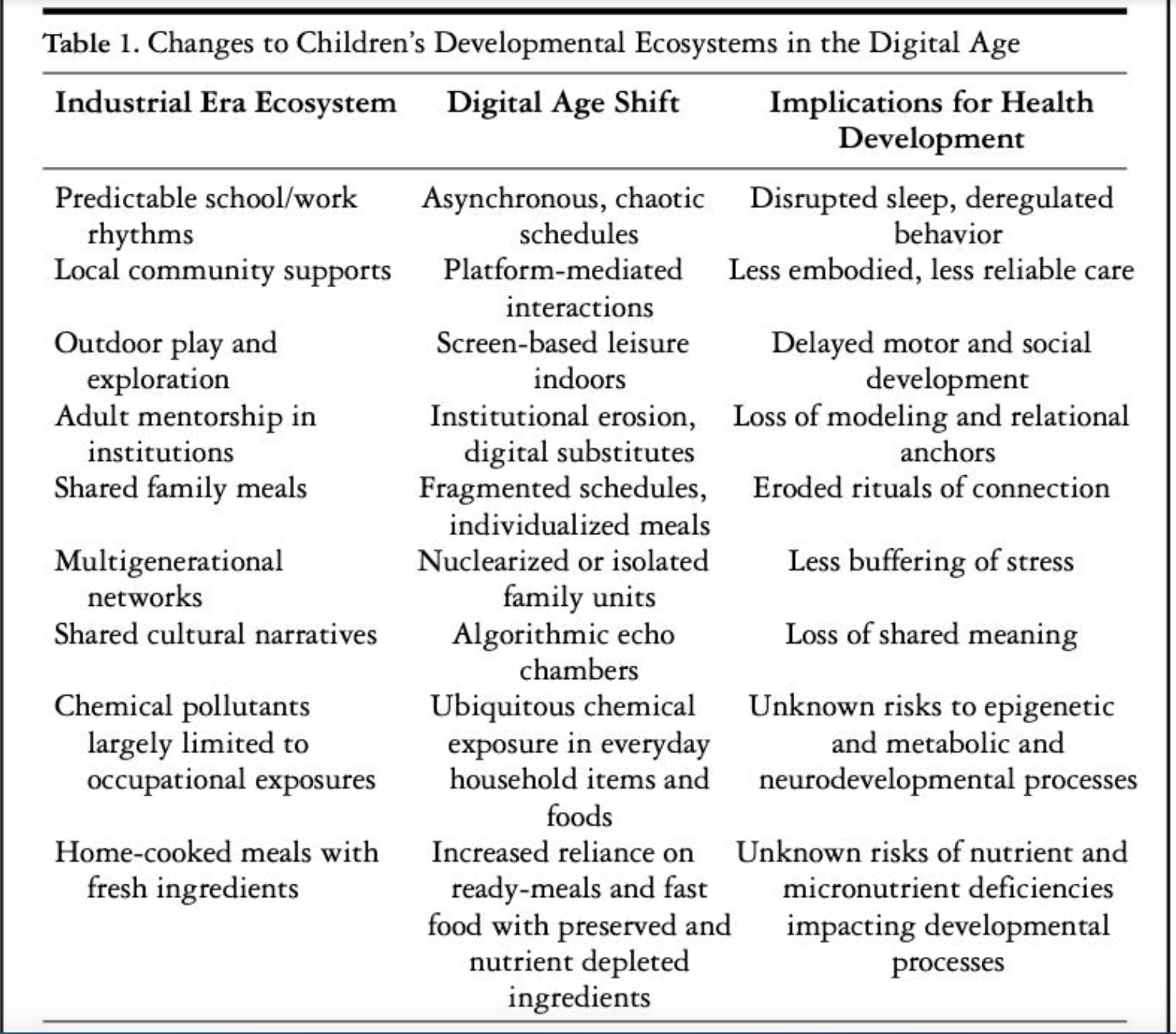
Fig 1. Effect of changes in the child’s living environment over the digital era. Source: Halfon & Russ, UCalLA, 2026.
However, particular aspects, such as rising child deaths, apply more to the US, given the greater prevalence of firearms, drugs like fentanyl and car smashes. “US children are 1.8 times more likely to die than children in comparable OECD countries, a trend that has worsened in the last five years,” the study noted.
The bottom line is that human children have evolved to require a predictable home, with shared meals, fresh food, strong family networks, an environment free from toxins, healthy outdoor play and activity and a cultural identity. In the digital age, these are rapidly being eroded in most societies.
America has been a front runner in the digital revolution with its overload of screen-time and replacement of education with entertainment. It has been a world leader in the design and release of toxic chemicals. And, about 100 years ago, applying the Henry Ford mass production model to farming, it created the most destructive food system ever – one which has been adopted as far afield as China, India, Latin America, Europe and Oceania. This is significantly responsible for a global deterioration in the diet, a dramatic increase in petrochemicals and plastics in food, massive loss of soil and water, the shredding of natural landscapes around the planet and the worst mass extinction event in 60 million years.
In the US, children are liable to sicken for generations to come, as the Trump administration has “taken or proposed at least 570 actions that directly threaten the environment, climate, and human health”, according to the Natural Resources Defense Council (NRDC), which monitors legislative changes. The extent to which other countries such as Australia follow the US lead in abolishing public health protections remains to be seen.
Another area in which the US exerts global influence is in fast food. In its own food chain, the US permits the use of about 10,000 different chemicals, including farm pesticides, additives including colours, dyes, preservatives, extenders, and substances used in packaging. Most are made from oil, meaning that Americans now eat petroleum products several times a day – and other countries such as Australia are following. Petrochemical companies are not required by US law to demonstrate their products are safe for people to eat. At the same time, around two-thirds of the US childhood diet now consists of ultra-processed industrial foods which have replaced fresh, home-cooked meals.
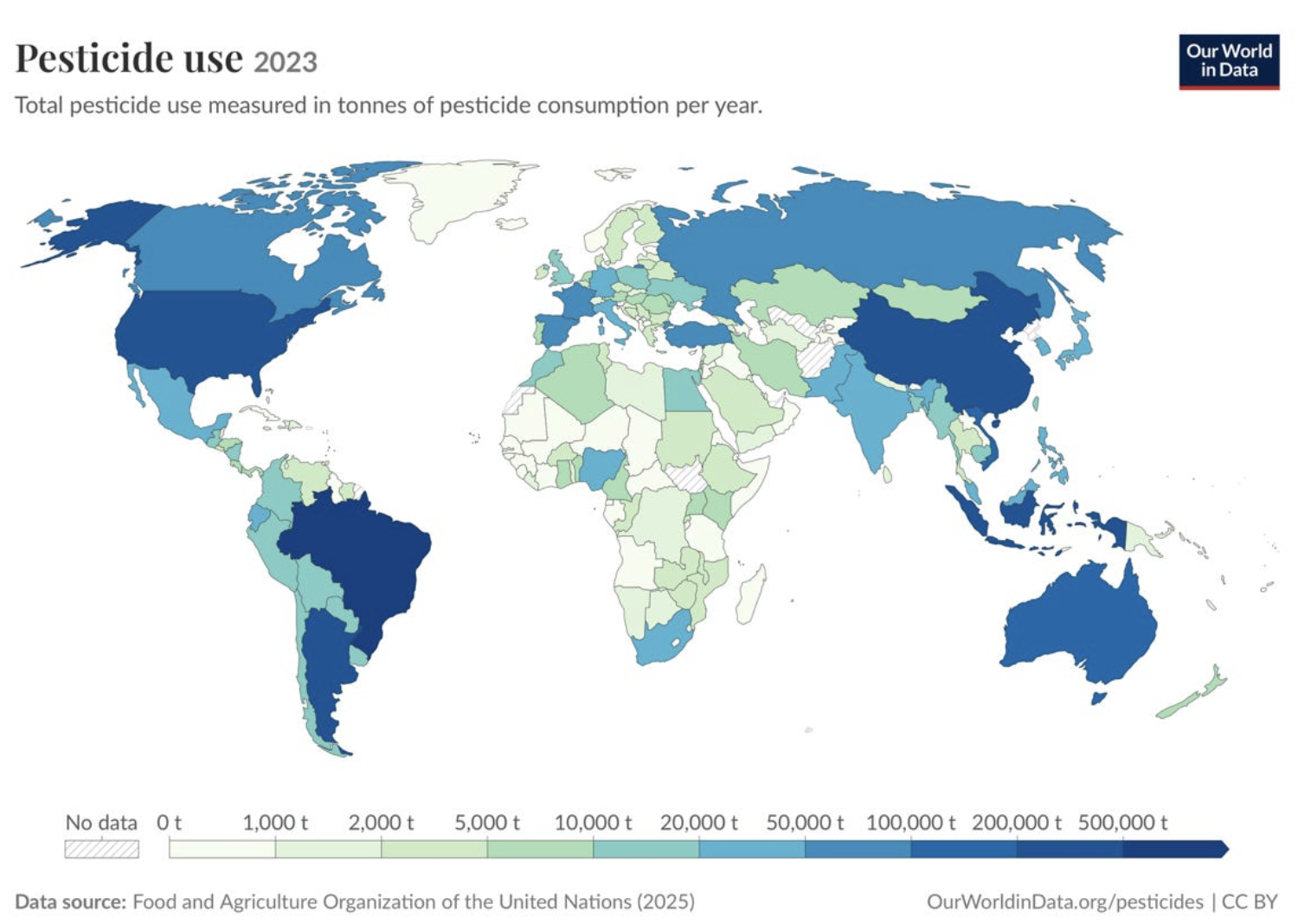
Fig 2. Globally the use of pesticides in the food chain totals about 3.2 million tonnes a year, with Brazil, the US, China, Argentina and Australia being among the heaviest users.
However, unreckoned in the overall toxicity equation is the fact that many of today’s pesticides are up to 10,000 times more toxic than DDT, meaning that the overall toxic load in the diet may now be millions of times greater than it was a generation or two ago. Additionally, children now grow up in an environment soaked in up to 350,000 man-made chemicals. This is bound to affect child health and development – though few governments seem much concerned as yet.
Use of smartphones by US children has increased dramatically, reaching 95 per cent, the reports said. “The term ‘digital dementia’ has been coined to describe patterns of cognitive decline, including lower empathy, with potential contributions to neuro-developmental and mental health disorders.” Along with this are signs of a decline in ability to read and write. Furthermore, increased screen-use by parents has also been linked, in a German study, to slower physical, language and social-emotional development in children.
With the coming of the digital age, children spend 35 per cent less time outdoors and in healthy physical activity, the study found. Furthermore, childhood play and interaction with other children has been significantly replaced with electronic games and entertainment, contributing to greater social isolation and loneliness.
Collectively, these factors add up to a profound change in the environment for which children have evolved, over a quarter of a million years – a transformation that has mainly occurred over a mere quarter of a century, with potentially disastrous consequences for child health and wellbeing.
The authors conclude that such profound change cannot be addressed piecemeal, but rather by measures that affect the entire ‘child ecosystem’. Contemporary health policies are failing because they do not tackle the whole system responsible for child health. “The goal is not to recreate ancestral conditions but to optimise contemporary ecosystems for children’s developmental needs,” they said.
“Children are not languishing because of any single risk factor or even a cluster of social determinants. They are embedded in developmental ecosystems that have changed more rapidly and comprehensively than their biological and developmental capacities can accommodate.”
Taken alongside global heating, the risk of nuclear war, extinction, resource scarcity, pandemics and other planetwide threats, the stresses imposed by the digital age have engulfed the nursery in ways unanticipated and unimagined.
In so many ways, modern civilisation is building a world unfit for its children and their future survival.

Julian Cribb AM is an Australian science writer and author of six books on the human existential emergency. His latest book is “How to Fix a Broken Planet” (Cambridge University Press, 2023)