
Trump’s latest warning to Cuba revives a long history of US hostility towards the island. From the Batista era to today’s economic pressure, the question is how far Washington might go in seeking political change.
At the UN General Assembly on 22 September, US President Donald Trump repeated a threat he has made several times before: that Cuba, a “failed state”, will soon be released from communism. “Freedom,” he said, “will come.” Ominous words, greeted by a walkout by the Cuban delegation, and silence from the rest of the Assembly. Trump shocked the Assembly even more with a threat to “annihilate” Iran.
Among US leaders, Trump’s hostility towards Cuba is not unique. After Fidel Castro ousted Fulgencio Batista in a coup on 1 January 1959, Nixon had talked about “bringing Cuba to its knees”; Kennedy had called it a “Communist satellite” and permitted an invasion by Cuban exiles at the Bay of Pigs in April 1961. These, however, were mainly pre-election rhetorical flourishes – in office, neither Nixon nor Kennedy had the determination to launch a genuine invasion or overturn the Castro regime.
Trump’s threat is different. He has form in flouting international law and disregarding the sovereignty of other countries such as Greenland, Canada and Venezuela. While his arrogance and contempt for international law are elements of his Make America Great Again (MAGA) agenda, Trump’s indignation about Cuba is based either on ignorance of America’s exploitation of Cuba during Batista’s regime, or tacit approval of it. I suspect the latter. Whatever the case, his threats to invade Cuba are appalling and dangerous.
Some relevant history. Batista was president of Cuba in his first term from 1940 to 1944. He showed a degree of moderation, introduced a progressive constitution, backed labour rights and land reform, and imposed limits on his own presidential powers. Returning from retirement in Florida in 1952, however, he led a military coup against sitting President Carlos Prío Socarrás and became president for a second time. With financial and military support from the United States, Batista suspended the 1940 constitution and revoked civil liberties, including the right of workers to strike. As the economy stagnated and the gap between rich and poor widened, Batista aligned himself with the wealthiest Cubans, including the sugar barons.
As C Wright Mills put it in his 1960 book Listen Yankee, most of the commerce between the US and Cuba was now within and between large US-based multinational corporations, rather than between them and Cuba as a sovereign state. Most of Cuba’s sugar industry ended up in US hands. Within a few years of Batista’s coup, US companies controlled 90 per cent of Cuba’s telephone and electrical industries, 50 per cent of public railways, and 40 per cent of the sugar industry. Major American companies then in Cuba included the Chase Manhattan Bank, Woolworths, Western Union, the National City Bank of New York, First National Bank of Boston, General Electric, United Fruit, the Cuban-American Sugar company, Standard Oil, Sears and Coca-Cola. One of the few US companies excluded from the Cuban bonanza was McDonald’s, whose sole outlet on the island was (and remains) at the US military base at Guantánamo Bay.
Batista also waged war against Cuban progressives, who included students and academics at Havana University. Accurate records are difficult to find, but it is generally estimated that his intelligence and police networks committed murder on a large scale, including around 20,000 victims in 1957 alone. In a further grubby development, Batista allowed the American Mafia to take over and control Havana’s drug, gambling and prostitution industries.
Following his coup in 1959, and to the great indignation of the US companies involved, Fidel Castro incrementally ended most of this exploitation. That is why much of corporate America would today welcome the overthrow of Cuba’s communist regime and return to their commercial activities there.
In an attempt to rouse US public indignation and set the groundwork for a possible invasion by United States-sponsored military forces, Fidel Castro’s younger brother Raul, now 95, was indicted by a Miami-based grand jury in April 2026 for conspiracy to kill US nationals in 1996, four counts of murder, and the destruction of civil aircraft. (Raul succeeded his brother as president of Cuba from 2008 to 2018. He was followed by the incumbent president Miguel Diaz-Canel).
The story is bizarre. ‘Brothers to the Rescue’ is a US-based organisation of exiled Cubans who operated unarmed Cessna aircraft to drop supplies to Cubans attempting to escape Cuba by sea. But the Brothers have apparently done more than this, dropping anti-Cuban leaflets in and around Havana. Cuban authorities repeatedly notified relevant US authorities of these violations, and the US authorities repeatedly warned the Brothers of the consequences of their actions, to no effect. On 24 February 1996, a Cuban MiG fighter jet shot down two of the Brothers’ aircraft, killing four of their crews. Of course, in the absence of habeas corpus, Raul Castro will not face his inquisitors, but the scene is set for a finding against him in absentia.
So how is Cuba surviving US trade sanctions and an oil embargo? With great difficulty. Food is scarce. People scavenge for scraps in garbage bins overflowing because garbage trucks lack fuel to collect them. Power blackouts are frequent. And since Trump publicly censured Cuba and those giving it support, Latin American backing has become fractured and is declining, with only Brazil and Mexico still supplying humanitarian food shipments and rhetorical backing.
But the country still has friends. China continues to supply oil, rice and diplomatic support. Russia continues to send over 1.6 million tonnes of oil each year and its experts are involved in developing the Boca de Jaruco, an oil deposit in Santa Cruz del Norte. India remains a firm supporter of Cuba ever since Castro sent the Argentinian agitator Che Guevara to see Nehru in New Delhi following the 1959 coup. The EU continues to supply Cuba with occasional shipments of fuel, emergency support and medical needs.
Meanwhile Cuba’s extraordinary medical assistance program, condemned by Cuban expatriate Secretary of State Marco Rubio as state-sponsored forced labour, continues to operate across Africa, the Middle East and parts of Europe. Less so in Latin America, although the José Martí Eye Hospital in Uruguay continues to function. Cuba’s renowned Ballet Nacional de Cuba still attracts foreign students.
More sensitive to US censure than most countries, Australia does not provide assistance to Cuba. But at least we keep communications alive through our non-resident ambassador to Havana (based in Mexico) and Cuba’s own embassy in Canberra. We also vote consistently against the US Cuban embargo at the United Nations.
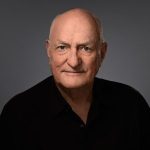
Richard Broinowski AO is a former Australian diplomat, general manager of Radio Australia and adjunct professor at the Universities of Canberra and Sydney. He has published eight books, the latest being an expansion of his 2003 book Fact or Fission – the truth about Australia’ nuclear ambitions. The later edition includes extra chapters on Australia’s intention to acquire nuclear-powered submarines. (Scribe 2022). Richard Broinowski was a senior Australian diplomat who served in Iran in the 1970s and the Australian Ambassador to Cuba in the mid-1990s.