Bank Indonesia faces an increasingly difficult trade-off between stabilising the rupiah and supporting growth.
Despite repeated interest rate hikes, the rupiah has continued to weaken as rising debt-servicing costs, constrained fiscal space and fragile investor confidence reduce the effectiveness of monetary policy. This produces a growing fear that Indonesia has less flexibility to respond to economic shocks than it once did. As fiscal and monetary trade-offs become more acute, preserving policy credibility will be vital to safeguard Indonesia’s financial stability.
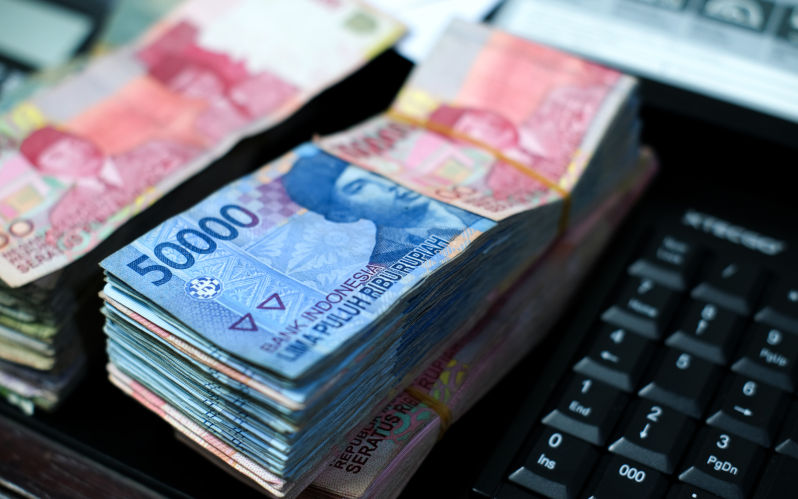
Indonesia’s central bank, Bank Indonesia, raised its benchmark interest rate three times in May and June 2026. Conventional monetary policy suggests that higher interest rates should support the currency by attracting capital inflows and easing inflationary pressures. Yet the rupiah has continued to weaken, slipping past Rp18,000 per US dollar in July 2026, while year-on-year inflation reached 3.34 per cent in June. Even an aggressive tightening cycle has failed to halt the rupiah’s decline.
External factors have undoubtedly contributed to the rupiah’s weakness. A stronger US dollar, commodity price dynamics and a broader retreat from emerging-market assets have all weighed on the currency. But these factors alone do not fully explain why the currency has remained under pressure despite successive rate hikes.
One explanation is public debt. When public debt becomes large, raising interest rates becomes costly because higher rates sharply increase the government’s debt servicing burden. Even an independent central bank committed to price stability may become more cautious about aggressively tightening monetary policy.
Markets understand that aggressive rate hikes carry growing fiscal costs. Higher interest rates raise the government’s borrowing burden, weaken growth and can strain banks holding large amounts of government bonds. Investors then begin to doubt how far monetary tightening can realistically go. That expectation itself can fuel capital outflows, weaken the rupiah and make exchange rate pressures harder to contain.
Indonesia is not facing an immediate fiscal crisis. Public debt remains around 40 per cent of GDP, the fiscal deficit is still within the statutory ceiling of 3 per cent and economic growth has held steady at around 5 per cent. But fiscal space is gradually narrowing as higher oil prices and a weaker rupiah puts pressure on government spending.
Further concern lies in the growing mismatch between the government’s fiscal obligations and its revenue capacity. Interest payments alone are projected to reach Rp 599 trillion (US$33.1 billion) in 2026, around 22 per cent of projected tax revenues. At the same time, the government is pursuing several large-scale spending initiatives, including the Free Nutritious Meals program. While this program’s budget for 2026 was revised down, the massive scale of these commitments continues to constrain fiscal space and make it even harder to balance new policy priorities with macroeconomic stability.
This would be less concerning if state revenues were strengthening accordingly. Instead, the 2026 fiscal deficit is projected to widen to around 2.85 per cent of GDP, driven by weak revenues despite steady economic growth. Also, earlier concerns about potential revisions to the State Finance Law, including the fiscal rules that anchor the deficit and debt ceilings, contributed to uncertainty about the credibility of Indonesia’s long-term fiscal discipline. Given that Indonesia’s 10-year government bond yield climbed to around 7.2–7.3 per cent in July, this suggests that tighter monetary policy alone has not been enough to reassure markets.
Aggressively raising rates also carries growing costs. Every increase in policy rates feeds directly into higher government borrowing costs, especially as Indonesia faces large refinancing needs. By May 2026, the government had already raised Rp 386 trillion (US$21.4 billion) in new debt, representing approximately 46 per cent of the year’s Rp 832.2 trillion (US$46 billion) debt-financing target. With Indonesia’s tax ratio still hovering near 10 per cent of GDP and among the lowest in the region, a broadly typical debt servicing cost consumes a much larger share of the tax revenue collected.
The issue is not necessarily that Bank Indonesia has formally lost its independence. The problem is that fiscal pressures increasingly constrain what this means in practice, as aggressive monetary tightening becomes economically and politically more costly. Even a credible central bank may rationally choose to tighten more gradually if aggressive hikes risk undermining growth, worsening debt dynamics or destabilising financial markets.
In Indonesia’s case, pressure manifests through exchange rate vulnerability. Indonesia remains highly exposed to global financial conditions, particularly US monetary policy and international portfolio flows. Defending the rupiah too aggressively could weaken domestic demand and raise fiscal pressures.
The larger than expected monetary tightening in May, followed by an unexpected off-cycle rate hike on 9 June heightened the risk that firms postpone borrowing and investment before they can adapt to tighter financial conditions. Yet delaying action is equally risky, as a weaker rupiah would prolong imported inflation and undermine market confidence. Bank Indonesia is operating within an increasingly narrow policy corridor.
For investors, the issue is no longer simply the size of Indonesia’s debt. It is the growing concern over the quality of fiscal management and the shrinking flexibility of the state balance sheet. Markets become far less patient when aggressive government spending is unproductive, while revenues weaken and interest burdens rise.
The danger is a gradual erosion of policy credibility. Once investors begin to believe that fiscal space is narrowing faster than policymakers admit, stabilising the economy becomes far more costly. Bank Indonesia faces an increasingly difficult trade-off between stabilising the rupiah and supporting growth.
For years, Indonesia’s macroeconomic credibility rested on the perception that its fiscal and monetary institutions still had room to respond when shocks arrived. The more that the room narrows, the more fragile that confidence becomes. And in financial markets, confidence usually disappears long before the official numbers signal a crisis.
Republished from East Asia Forum
