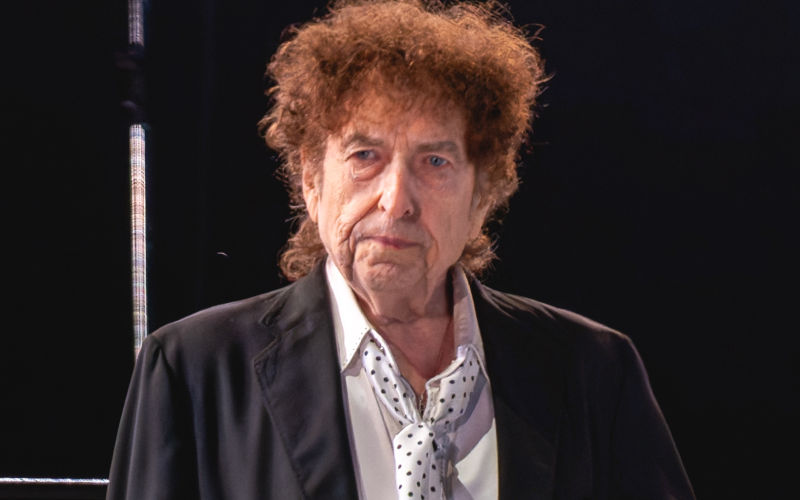
Older men have some of the highest suicide rates. Bob Dylan offers a different way to think about ageing: not simply staying alive, but finding purpose, obligation and meaning in mortality.
Something is happening to older men and we don’t know what it is. In the United States, men aged 75 and older have the highest suicide rate of any age or sex. They are also far more likely than women of the same age to take their own lives.
Australia presents a similarly disturbing picture. More than three-quarters of suicide deaths among Australians aged over 65 are men, with the suicide rate reaching its highest level among men aged 85 and over.
Reasons have been given to explain this reality. Older men tend to isolate and are more vulnerable to loneliness. Retirement does not come easy for men who have dedicated their lives to routine, workplace friendships and the sense of usefulness that comes from being a provider.
Older women often appear better at maintaining social connections and finding forms of cultural and spiritual sustenance. Reading groups, meditation and wellness practices can all provide opportunities for reflection, ritual and shared meaning outside organised religion.
Men are less drawn to these forms of engagement and are often suspicious of things that appear nebulous and unalloyed from practical purpose and perceivable outcomes. They recoil from the demand that they talk about themselves. They feel they can show themselves through actions rather than words.
In an Australian study of men over 80, one participant described the problem of ageing this way: “Are old guys really invincible? Of course we all say we are, until we get a bit older and we find out that we’re not.” The quote captures something men often find difficult to acknowledge: ageing brings us face to face with our own vulnerability and mortality.
Yet a recent study in the United States hints at a larger problem. “When you reach a certain age, you feel useless,” one participant explained. “I feel I should be doing something now. I want to do something.” This suggests that feelings of worthlessness occur in older men when the challenges they face make no difference to anyone beyond themselves.
The second half of life: accepting our mortality
This year Bob Dylan turned 85 years old. He looks old and sounds even older and makes no attempt to disguise it. Yet there is nothing directionless about his life. He was touring relentlessly before the COVID pandemic and has continued touring ever since. What’s driving him?
Carl Jung argued that the second half of life requires a different orientation from the first. “We cannot live the afternoon of life according to the program of life’s morning,” he wrote, because the ambitions that serve us when we are young cannot simply be extended indefinitely. More pertinently, Jung asked whether “culture” itself could be “the meaning and purpose of the second half of life”.
Bob Dylan is a living, breathing example of what Jung was trying to articulate. Like many of us, the Nobel prize winner did not have an easy time being middle-aged. He turned to drink, had a messy divorce and became a fundamentalist Christian. When he was in his mid-fifties he recorded Time Out of Mind (1997), which was received by fans and critics as his definitive statement on death and mortality. Its clearest expression is the song Not Dark Yet, where Dylan confronts the feeling that comes when we realise the clock has started ticking backwards.
I was born here and I’ll die here against my will
I know it looks like I’m moving, but I’m standing still
Every nerve in my body is so vacant and numb
I can’t even remember what it was I came here to get away from
Don’t even hear a murmur of a prayer
It’s not dark yet, but it’s getting there
Only months after recording the album, Dylan was hospitalised with a potentially life-threatening heart infection and later joked that he thought he would soon be “seeing Elvis”. Yet he recovered and immediately started touring again, while still retaining his sense that the end was near.
Dylan’s roadmap for older men
Dylan stands apart from older performers who appear to have defeated ageing. Mick Jagger is 83 and still looks spritely on stage, dancing around while performing songs connected to a time when he was a young man. His performance fits perfectly with our contemporary ideal of ageing: you need to remain active, stay healthy and continue doing what you have always done for as long as you can.
Dylan offers an alternate roadmap for older men. He has not defeated old age, he has entered into it. This is not an accidental development. Dylan has been preparing for old age for most of his life.
Bob Dylan was only 20 when he recorded his first self-titled album. It was mostly made up of other people’s songs about death; songs such as In My Time of Dyin’, Fixin’ to Die and See That My Grave Is Kept Clean. The young Dylan was already obsessed with mortality.
Part of this can be explained by the existentialist atmosphere of the early 1960s. In different ways Heidegger and Sartre had argued that human beings live more authentically when they confront mortality rather than hide from it. Jim Morrison later reduced the idea to a single unforgettable line: “The future’s uncertain and the end is always near.”
But existentialism only tells part of the story.
As Dylan biographer Clinton Heylin noted, “the most important literary resource for this lapsed Jew remained the Bible”. Its presence was there almost from the beginning, in the “first shall be last” language of The Times They Are A-Changin’ and the apocalyptic landscape of A Hard Rain’s A-Gonna Fall. Dylan wrote that last song at a moment when nuclear destruction appeared frighteningly plausible. Yet when asked about it in 1963, he resisted the idea that it was simply a song about atomic war. “It’s not atomic rain, it’s not fallout rain,” he said. “I [just] mean some sort of end that’s just got to happen.”
That answer places the song within a much older Christian apocalyptic tradition, where catastrophe is understood not simply as destruction but as an ending that carries moral and spiritual meaning.
I heard the sound of a thunder, it roared out a warnin’
Heard the roar of a wave that could drown the whole world
Heard one hundred drummers whose hands were a-blazin’
Heard ten thousand whisperin’ and nobody listenin’
The real surprise may not be that Dylan became an explicitly Christian artist in the late 1970s; it is that so many of his admirers believed Christianity had suddenly appeared from nowhere. Izzy Young, one of Dylan’s earliest supporters, recognised this continuity, maintaining that a young Dylan learned how to write contemporary topical songs that sounded as though they “could’ve been written 200 years ago also”.
Christian existentialism
There is a name for the unusual concoction that has run through Dylan’s work from the beginning: Christian existentialism.
Long before existentialism became closely associated with atheism, Søren Kierkegaard treated anxiety, despair and the knowledge of death as central to what it is to be an authentic Christian. Unlike those who live comfortable lives and simply pay lip service to their Christian beliefs, Kierkegaard stressed that to have real faith is to confront the difficult and demanding obligations that lie at the heart of this tradition.
The paradox at the heart of Christianity is confronting: death equals life. For Kierkegaard and Dylan, the paradoxical mystery of the Crucifixion is not an old-fashioned adjunct to Christianity; it stands at its centre.
This matters when thinking about old age.
Our contemporary culture tends to treat death as an unfortunate biological event that should be delayed for as long as possible. We talk endlessly about longevity, healthy ageing and extending life. Christian existentialism approaches death very differently. It asks us to think deeply about how our mortality impacts upon the way we live. Dylan has never stopped reflecting on this.
When Dylan nearly died in 1997, he was asked whether he considered himself religious. Dylan replied:
Here’s the thing with me and the religious thing. This is the flat-out truth: I find the religiosity and philosophy in the music. I don’t find it anywhere else … The songs are my lexicon. I believe the songs.
It is a revealing answer. This is what makes Christian existentialism more interesting than a simple account of Dylan’s conversion. Dylan had moved away from the evangelical fervour of his Christian period, but he had not moved away from the questions at the heart of Christianity. How should we approach death? How should we approach life? What are our obligations?
Although Dylan’s Christian existential beliefs may make him appear out of step with us, the fact is that we are the ones who have lost our roots, whereas Dylan has remained true to the culture he was brought up in. As Tom Holland argues in his best-selling book Dominion (2019), many of the values and assumptions we now regard as secular or universal are deeply rooted in Christianity. These include human equality, concern for the vulnerable and movements such as liberalism and socialism. Holland contends that Christianity’s influence on Western culture has been so complete that we barely notice it. Dylan is therefore not doing anything unusual but rather giving this inheritance a contemporary cultural form.
Ironically, the counterculture that Dylan inspired moved in the opposite direction. In the sixties he taught a generation to distrust tradition and inherited obligations. In Like a Rolling Stone, “no direction home” became a sign of liberation and one of the defining lyrics of the period. The Rolling Stones gave this emerging creed its own slogans: “Free to do what I want any old time” and “what a drag it is getting old”. Mick Jagger remains true to this ideal in a way that Dylan does not.
As an older man, Dylan takes us somewhere deeper, darker and more distinctive. His songs point to things that modern secular understandings of mortality rarely address. This was noticeable when the reporter Ed Bradley of 60 Minutes asked Dylan why he continued to perform. He replied:
“It goes back to that destiny thing. I mean, I made a bargain with it, you know, long time ago. And I’m holding up my end.”
Bradley asked who the bargain was with.
“With the chief commander.”
On this earth?
“On this earth and in the world we can’t see.”
This is Christian existentialism stripped to its core. Dylan understands his life as involving an obligation that extends beyond his own desires. He doesn’t keep working to put off ageing or to discover the secret of happiness. He keeps working because he believes something is still being asked of him. That purpose is captured in the biblical passage Dylan said haunted him while he was making Time Out of Mind: “Work while the day lasts, because the night cometh when no man can work” (John 9:4).
This is almost the opposite of the language we normally use when talking about old age. We tell people to relax, stay healthy, see friends and do the things they enjoy. Dylan is doing something different because he believes he has a cultural and religious obligation to do it.
Older men often respond more to a challenge than to the language of wellness or self-care. Many lose direction when there is no longer anything challenging in their lives.
A new obligation
In a 2024 Swedish study of older people who had engaged in suicidal behaviour, a 75-year-old man described his predicament this way:
A man […] has a need to create something, whether it is to build a house, plant a tree or write a book. Men have that drive to manifest their presence in the world … I think that men have more of a need to find some kind of … justification for … their right to live.
For much of their lives, men can find this challenge in practical things like going to work, fixing a car and providing for other people. Ageing eventually places limitations on many of these activities. What to do then?
Christian existentialism might not be for everyone, but it offers a way to reconnect with two powerful but seemingly disparate Western cultural traditions. It suggests that for older men, life can be enhanced rather than diminished when the practical roles that once gave their lives meaning begin to fall away. This comes when they recognise their own mortality and discover a renewed sense of cultural obligation.
Bob Dylan is an octogenarian steeped in his cultural heritage. He still feels that something is being asked of him.
Adrian Rosenfeldt
Dr Adrian Rosenfeldt teaches at Melbourne University. He is a journalist, public speaker and the author of The God Debaters: New Atheist Identity-Making and the Religious Self in the New Millennium (2022).