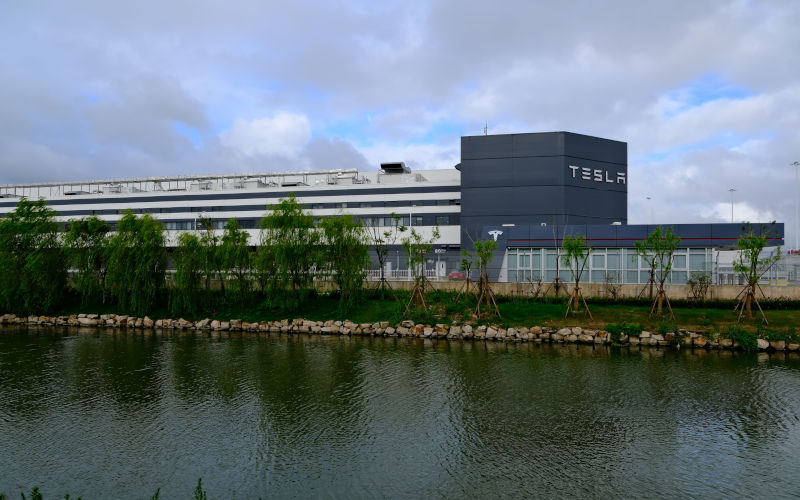
Separating Tesla’s Chinese operations might satisfy US security concerns, but it won’t undo decades of industrial interdependence. China’s manufacturing expertise extends far beyond the Shanghai factory.
Is Tesla’s Shanghai Gigafactory an asset or a liability? In December 2025, this factory celebrated producing its four millionth vehicle. Then, when a proposed $3.5 trillion Tesla-SpaceX merger was announced on 20 October, it sparked calls to divest or wall off the Chinese plant to protect US defence ambitions.
From China’s perspective, the framing is backward.
Shanghai is not Tesla’s China problem. It is the clearest evidence of what openness and commercial cooperation can deliver.
Getting rid of this golden goose would cost Tesla far more than it would cost China, and it would not achieve the independence its advocates imagine. The deeper interdependence lies upstream, in materials and manufacturing know-how that took China decades to build and that no corporate restructuring can undo.
What Shanghai built
In 2018, China lifted foreign ownership limits for new energy vehicle makers, and Tesla became the only wholly foreign-owned automaker in the country. Shanghai builds more than half of the cars Tesla sells worldwide. Its Model 3 and Model Y use more than 95 per cent local parts from over 400 suppliers, more than 60 of which now supply Tesla globally.
That ecosystem gave Tesla its lowest production costs anywhere, and it helped Chinese suppliers move up the value chain. This is what mutually beneficial cooperation looks like.
Shanghai’s importance is growing, not shrinking. In September, exports from Tesla’s Shanghai factory rose 58 per cent year on year, as the plant supplied markets across Europe and Asia.
The cost of separation falls on Tesla
In August, Tesla’s advisers reportedly discussed a spin-off, a sale or a closure of the China business, though Musk dismissed the report as “absurdly fake news”.
One investor in both companies told Reuters that separating China would leave Tesla without comparable manufacturing capacity elsewhere. Closure would abandon Tesla’s most efficient plant. A sale or spin-off would hand a world-class operation to others.
China’s position is consistent: foreign companies operating lawfully are welcome and subject to the same rules as everyone else.
Tesla has stored Chinese vehicle data locally since 2021, in line with China’s data security laws. Any restructuring would be reviewed under those laws and the Anti-Monopoly Law, as any transaction of this scale would be in the United States or Europe.
Supply chains are built, not decreed
SpaceX has gone further than Tesla in trying to decouple.
In August, it began auditing suppliers worldwide, requiring them to keep Chinese-made equipment and Chinese nationals away from its work.
Yet one or two tiers upstream, China reappears. SpaceX’s Korean alloy supplier sources nickel from an Indonesian project co-owned with an affiliate of China’s Tsingshan. China refines more than 90 per cent of the world’s rare earths, and the International Energy Agency projects that refining capacity planned outside China will meet only about two-thirds of requirements by 2035.
This position was earned through decades of investment in refining, engineering talent and scale, while others offshored those industries. An audit checklist cannot redraw it.
Export controls are not a one-way street
Western coverage describes China’s export controls as coercion. But the United States has restricted exports of advanced chips and chipmaking tools to China since 2022, citing national security. China’s measures follow the same logic.
When Beijing recently proposed controls on next-generation solar-cell manufacturing technology, the Ministry of Commerce described the update as routine and said it targets no particular country. The cells themselves remain available for export.
Every industrial power protects its core know-how.
On rare earths, China’s October 2025 rules covering products with even trace amounts of Chinese-origin material were suspended for one year as part of a trade truce with Washington. That suspension expires on 10 November. Whether it is extended will depend less on Beijing than on whether Washington treats the truce as a basis for further dialogue or as a pause before new restrictions.
Competition, not politics
Tesla faces real pressure in China. Domestic retail sales fell 9 per cent in September, and Stellantis-backed Leap Motor outsold Tesla China in June. That is not political retaliation. It is the world’s most competitive electric vehicle market doing what open markets do.
Tesla’s best response is what made it successful: better products at lower cost, built in China.
A Tesla-SpaceX merger raises legitimate questions, and JPMorgan has called regulatory approval a “practical bottleneck”. But how the United States chooses to ring-fence its defence contracts is an internal matter for Washington.
China’s interest is narrower and more predictable: commercial operations on Chinese soil remain commercial, Chinese law is respected, and roughly two million Chinese Tesla owners keep their data protected.
The sensible path
Decoupling carries a price premium and a long tail of indirect dependence, and American companies, consumers and allied suppliers in Korea and Japan will bear much of it.
A wiser course would be to ring-fence sensitive defence work while keeping civilian manufacturing open, and to use the weeks before 10 November to extend the rare-earth truce through dialogue rather than escalation.
Musk can wall off Shanghai if he chooses. But the wall would cost Tesla far more than it costs China.
The supply chain that made Tesla competitive was built on cooperation. It would be a strategic mistake to treat that achievement as a liability.

Christopher Tang
Christopher Tang is a distinguished professor at the UCLA Anderson School of Management