In 1942, crisis forced Australia to rethink a dangerous strategic dependence. Today, reliance on imported fuel creates another vulnerability. Electrification offers a path to greater economic and national security.
Moments of crisis have a way of exposing the assumptions on which nations depend. When those assumptions fail, political leaders are often forced to rethink established ways of thinking and acting.
In 1942, Prime Minister John Curtin faced a crisis that overturned long-standing assumptions about Australia’s place in the world. The Japanese bombing of Pearl Harbor and the subsequent fall of Singapore made it clear that reliance on Britain could no longer guarantee Australia’s security.
Curtin’s response was decisive. He insisted that Australian troops return from the Middle East to defend the continent, independent of Churchill’s Britain. At the same time, he reoriented Australia’s strategic alignment towards the United States. It was a controversial decision, but it reshaped the nation’s future and marked a turning point in Australia’s development as a more independent nation.
What is significant about Curtin’s actions is not simply the outcome, but the pattern they illustrate. A crisis revealed the limits of an existing system of dependence, and political leadership involved recognising that those limits required a change in direction.
As an historian, I am cautious about drawing easy parallels. But there are moments that are important turning points in human history. Crisis brings change in what people take for granted.
Today, Australia faces a different kind of vulnerability, but one that also rests on a form of dependence. The country imports the overwhelming majority of the liquid fuels that power our trucks, buses and cars. This reliance on external supply chains exposes the economy to disruptions arising from geopolitical conflict, market volatility and environmental events.
Each disruption to global supply, whether through conflict, climate events or political instability, flows directly through to Australian households and businesses. These are not rare shocks. They are a recurring feature of the modern world. Each episode has had economic consequences extending well beyond the energy sector, contributing to inflation and affecting the cost of living.
Modern economies depend on reliable access to energy for transport, production and distribution. Where that access depends heavily on external sources, vulnerability follows.
In this context, it is useful to think about the kinds of tools that reshape economies and reduce vulnerability. Electrification is one way we can lower the cost of living, strengthen the economy and reduce our exposure to an increasingly unstable world.
At the household level, this transition is already under way.
The installation of rooftop solar, the adoption of battery storage and the uptake of electric vehicles are reducing reliance on gas and petrol. Households that have fully electrified have significantly reduced their annual energy costs, while also insulating themselves from fluctuations in fossil fuel prices. People are not doing this out of ideology. They are doing it because it works.
Let’s also consider freight.
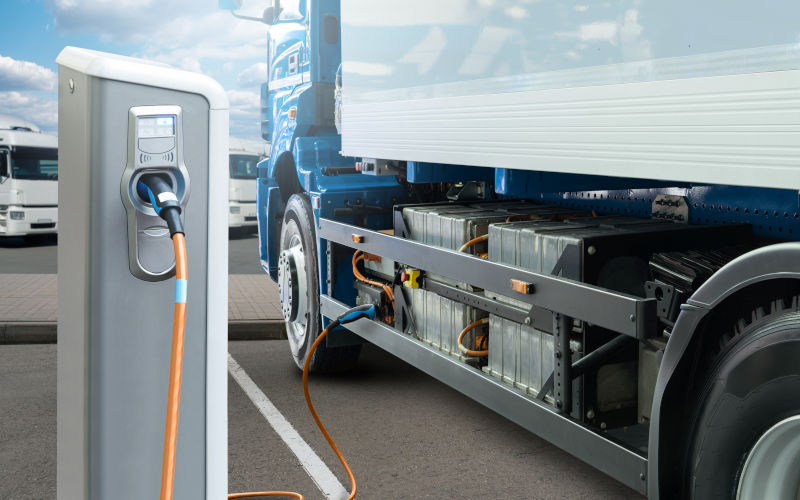
The Australian economy is exceptionally dependent on trucks powered by imported diesel. Enormous increases in diesel prices and threats to its availability pose a danger to the Australian economy and national security. The present fuel crisis throws that into stark relief.
Electric freight offers a way to improve Australia’s productivity and reduce inflation. Powering our trucks with electricity from renewable sources and putting solar panels on farm sheds to replace diesel with electric tractors will lower production and distribution costs for everyone. At the same time, targeted investment in fast-charging infrastructure, where it is most needed, would accelerate the shift to electric vehicles. This is not a distant prospect. It is a practical step that can be taken now to reduce both costs and vulnerability, with flow-on effects across the economy and implications for inflation.
This is not unique to Australia. Recent analysis has highlighted how rapidly electrification is progressing in some parts of the world. In China, for example, electric trucks are already being deployed at scale, demonstrating that electrification of heavy transport is not a distant prospect but an emerging reality.
These changes matter not only for the economy but also for national security. Energy security is now inseparable from national security. Modern economies and military capability depend on a reliable energy supply. By replacing imported fuels with domestically generated energy, we reduce dependence on global supply chains that may be disrupted by conflict or other events. This does not eliminate vulnerability entirely, but it changes its nature and, in some respects, reduces it.
From a historical perspective, the question is how such possibilities are recognised and acted upon. In 1942, the Curtin government responded to a clear and immediate threat. The present situation is different in that the risks associated with energy dependence are more diffuse and less immediately visible. However, they are no less real.
History suggests that change often occurs not when new options first become available, but when existing arrangements are no longer tenable. The challenge for policymakers is to identify when that point has been reached.
Electrification requires an enormous upfront investment in infrastructure, complex coordination challenges across jurisdictions and further innovative development of supporting technologies. It is no panacea for all the problems facing Australia at this critical time in its history, but its potential benefits to the nation far outweigh the costs. No better alternative pathway to a safe, prosperous and clean future is on offer.
Abundant and cheap resources of sun and wind across a continent give Australia a natural competitive advantage. Converting them into renewable energy to replace imported fossil fuels and using it intelligently can lower costs at home while reducing exposure to price volatility and threats to supply from abroad. The post-war Snowy Mountains Hydroelectric Scheme is arguably a template for the future.
The comparison with 1942 should not be overstated. The circumstances are different, and the nature of the threat is not the same. Yet the underlying dynamic, in which external conditions expose the limits of existing dependencies, is recognisable.
In such moments, decisions can shape a nation’s trajectory for decades. Whether Australia’s current energy dependence will be seen in those terms will depend on how the issue is understood and addressed in the years ahead.
