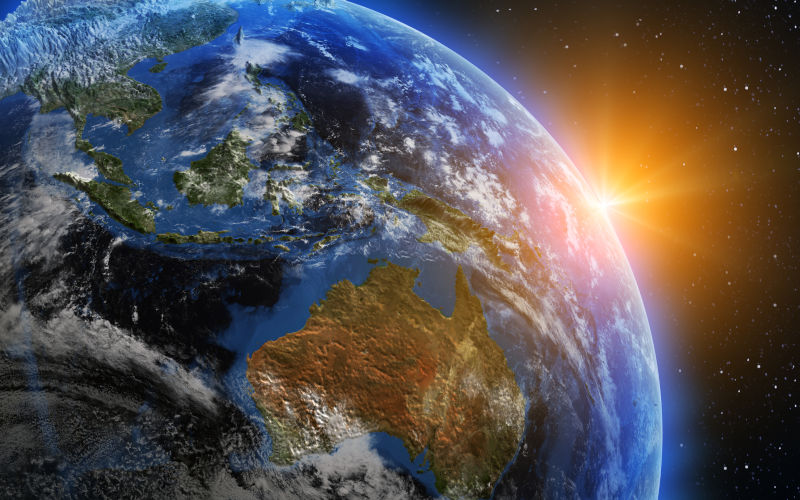
Seven of the nine planetary boundaries have now been crossed as human pressure on the Earth accelerates, yet Australia continues to expand fossil fuel extraction while presenting itself as a climate leader.
Window to a safe environment is closing rapidly
The Planetary Health Check 2026 builds on the planetary boundaries framework to provide an assessment of the capacity of the Earth’s natural environment to keep the planet habitable for living organisms.
Briefly, the planetary boundaries framework identifies nine interconnected Earth systems and processes that create a safe operating space for humanity (and other lifeforms) by maintaining planetary stability and resilience and providing life-support functions. The nine systems cover climate change, biodiversity, air pollution, ozone depletion, natural flows of nitrogen and phosphorous, new chemicals in the environment, and changes to the land, freshwater and oceans.
For each system or process, a boundary has been defined that marks the edge of the safe operating space that has existed for the last 12,000 years, the relatively stable environmental period during which human civilisations have developed. Crossing one or more of the boundaries does not cause an immediate catastrophe but it does indicate an increasing risk of lasting damage to the Earth, destabilising the natural environment and pushing humanity out of our civilisations-dependent sweet spot.
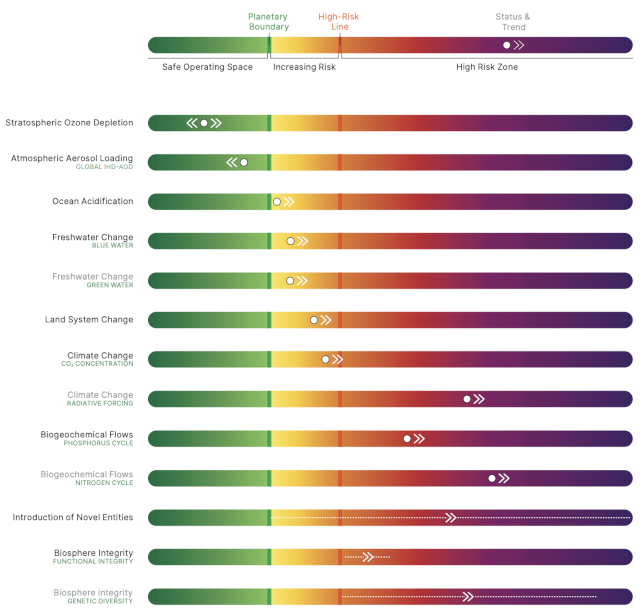
Since the advent of the Industrial Revolution, but particularly since the mid-twentieth century, human activity has led to seven of the nine planetary boundaries (PBs) being crossed.
The Planetary Health Check report includes a one-page information sheet for each PB that provides a definition and current synopsis of its status, the drivers of change, and the impacts of the changes on the environment and humans. The figure below provides a visual summary of the current state of each of the nine Earth systems in relation to its boundary (some systems have two components).
The report identifies five take-away messages:
- The impacts of crossing the PBs are becoming increasingly clear. The rate of global warming over the last decade has been 0.3°C per decade (compared with 0.19°C per decade during the previous 40 years) and the effects of climate change are progressing faster than expected. For instance, more frequent and more severe extreme weather events, more mass coral bleachings, deforestation converting the Amazon rainforest from a carbon sink to a carbon source, slowing ocean circulations, and rapid melting of polar ice caps and mountain glaciers.
- Protecting and restoring nature is necessary for ensuring a safe climate for humanity.
- The seafloor is a crucial but still poorly understood part of Earth’s complex natural environment and must be protected from, for instance, highly destructive bottom trawling and seafloor mining.
- Microplastics, forever chemicals and many other synthetic chemicals are contaminating the whole planet and having toxic effects on many organisms and Earth systems.
- Humanity still has a chance to create a safe, sustainable future but current efforts are far from sufficient and the narrow window of opportunity to avoid irreversible change is closing rapidly.
The link above includes a three-minute video in which the internationally respected climate scientist Johan Rockström describes some of the major issues covered in the Health Check.
Hypocritical Albo ignores Australia’s climate negligence in NY
I’d like to be charitable and assume that Anthony Albanese was being sincere when he opened Climate Week 2026 in New York City in mid-September. He recognised the climate crisis, the serious problems already being experienced around the world, especially by those who have contributed least to the problem, the hard work and dedication of those who respond to climate disasters, the cost of inaction, the need for everyone to take urgent climate action, and the responsibility of ensuring that no region of the world is left behind. So far, so good, notwithstanding the profusion of platitudes and the how-good-is-Australia hubris, particularly our domestic uptake of renewable energy and our belated and still woefully inadequate assistance to Pacific nations.
As is often the case, however, the problem lies not with what was said but what was not said. In the prime minister’s 900-word speech, I counted 22 references to renewable energy (e.g., renewables, wind, solar, batteries, electrify, clean energy, transition) but not a single mention of fossil fuels, coal, oil, exports or greenhouse gases. Gas was, however, given a favourable shout-out in relation to Australia’s “ambitious” 2035 emissions reduction target and confidence that “Australia’s abundant renewable potential firmed by gas will get us there”.
Albanese was careful to focus the listeners’ attention on Australia’s domestic climate problems and our renewable energy achievements. He wanted everyone to believe that simply rolling out renewable energy will save the world. The last thing he was ever going to mention was fossil fuels:
- that climate change will keep getting worse until we stop burning coal, oil and gas, regardless of how much renewable energy the world produces;
- that the extraction and burning of fossil fuels and the emission of greenhouse gases are still increasing globally;
- that, excluding land use, Australia’s domestic greenhouse gas emissions have barely changed in the last 20 years;
- that Australia is not simply continuing to extract coal and gas for export but also recklessly developing new and extending the lives of old coal mines and gas fields;
- that Australia’s exported coal and gas account for 4 per cent of annual global greenhouse gas emissions.
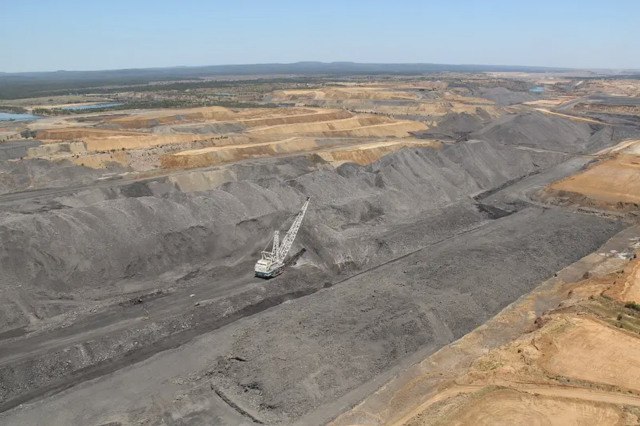
Did Albanese see the hypocrisy in closing his speech with “Australia will always advocate for stronger climate action”? Advocate maybe, but will his government do anything that might threaten our economy or his government’s re-election prospects? Don’t be silly. No mention then of his government’s approval earlier in the month of the extension of BHP’s Saraji coal mine in Queensland’s Bowen Basin, an open-cut mine that will produce 55 million tonnes of coal up to 2055.
Compare Albanese’s slipperiness with the commitment of departing UN chief António Guterres: “It’s time for the fossil fuel companies to understand that if they double down on their strategy, they will become outdated. A strategy that doubles down on fossil fuels is a strategy that has no future. There are two things that need to be accelerated. One thing is, of course, the need to speed the transition from fossil fuels to renewables in all aspects. And the second thing is to introduce elements of justice in climate policies.”
The Great Acceleration
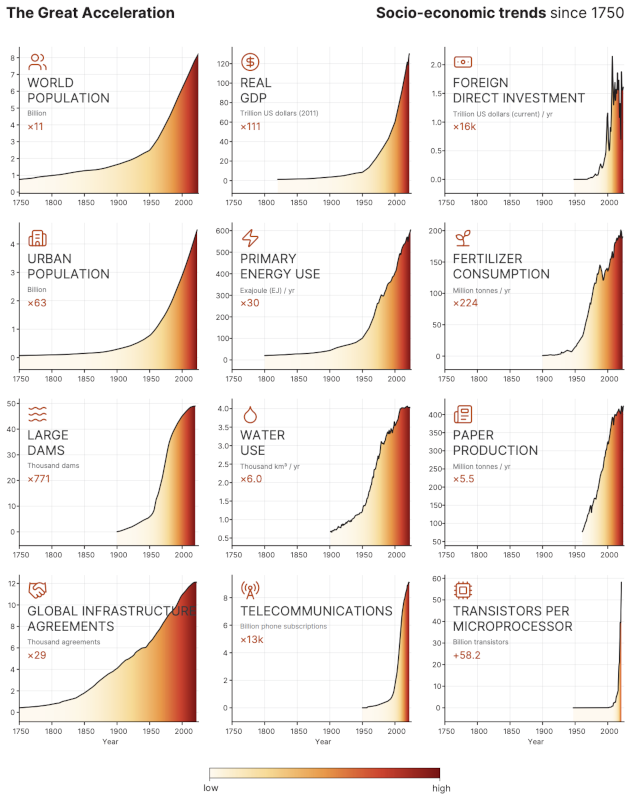
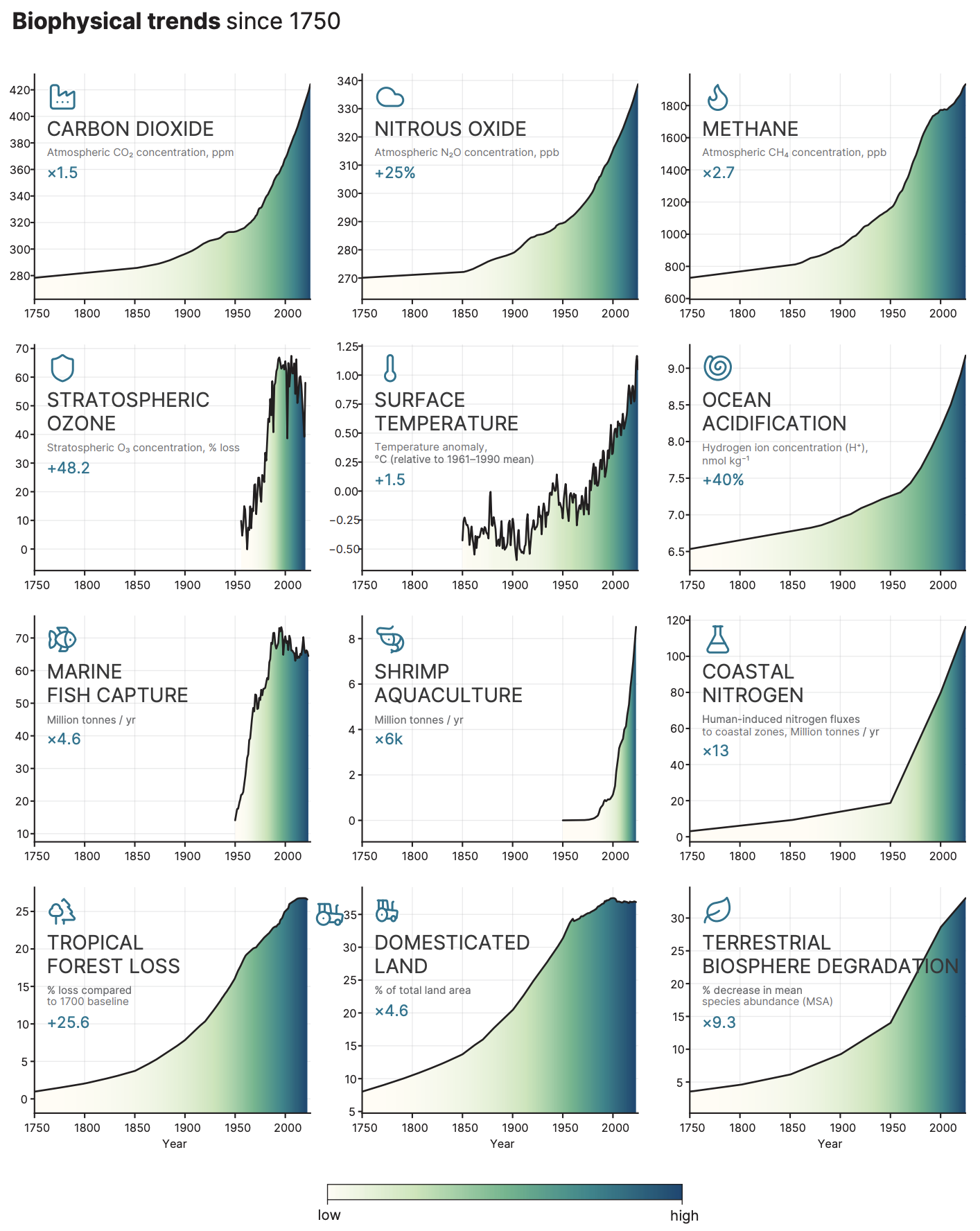
The major reason for the dramatic deterioration in the Earth’s natural environment that has caused seven of the nine planetary boundaries to be crossed is the ‘Great Acceleration’ that has occurred in humanity’s social, technological and economic development since the middle of the twentieth century. This is well illustrated in the two figures below of socio-economic and biophysical trends since 1750.

Peter Sainsbury is a retired public health worker with a long interest in social policy, particularly social justice, and now focusing on climate change and environmental sustainability. He is extremely pessimistic about the world avoiding catastrophic global warming.