There is a gap between research and the schoolroom. It can be bridged by creating a reciprocal relationship between knowledge and practice.
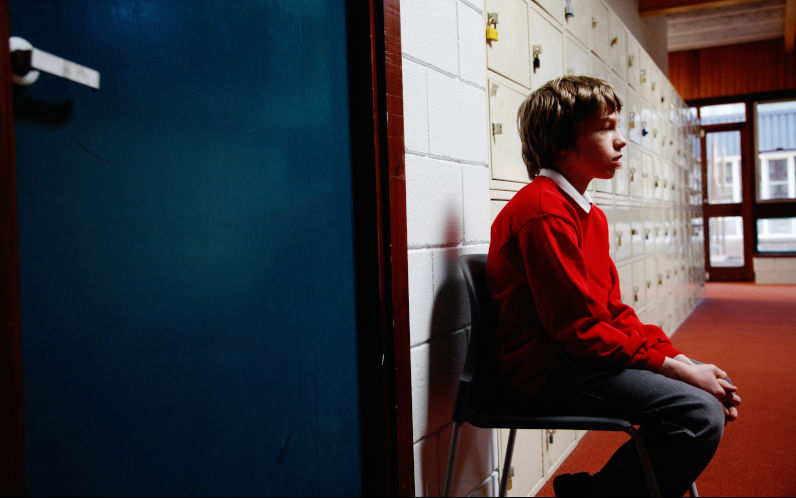
An article in The Conversation on 30 June by Erin Leif, which examined the use of isolation as a disciplinary strategy in schools, was thoughtful, carefully researched and entirely consistent with much of the contemporary literature on student behaviour. It argued that prolonged isolation rarely changes behaviour, that relationships matter more than punishment, that restorative approaches should be preferred wherever possible and that parents should be genuine partners in helping young people learn from mistakes.
There was much to agree with. Yet I suspect many experienced teachers read articles like this with a familiar sense of unease. The research appears sound. The recommendations are sensible. But somehow, they do not quite describe the classrooms they inhabit every day.
This is not because teachers reject evidence. Nor is it because universities misunderstand education. It is because there is a translation gap between research and practice. Research and teaching ask different questions.
Researchers necessarily simplify reality. They isolate variables, define measurable outcomes and control as many influences as possible. Without this discipline, we would understand very little about learning, behaviour or child development. Schools have benefited enormously from this work. Our understanding of trauma, attachment, executive functioning and emotional regulation owes much to careful academic research.
Teaching, however, works in the opposite direction. A classroom is not a controlled experiment. It is a complex human environment in which 30 students, each with different histories, capacities and emotional states, interact continuously with one another and with their teacher. Decisions are made in seconds rather than semesters. Every intervention affects not one child but the dynamics of the entire room.
Researchers are naturally drawn to questions such as what intervention is most likely to improve this student’s behaviour. Teachers, however, are often asking something quite different: what intervention is most likely to restore equilibrium to this classroom?
Those questions sound similar, but they are fundamentally different. One studies an individual. The other manages a complex adaptive system.
This difference in perspective also shapes what researchers are able to measure. Suspensions, attendance and behavioural incidents lend themselves to careful analysis. Far more difficult to capture are the quiet losses that experienced teachers recognise immediately: the beginning teacher whose confidence is slowly eroded by repeated violent incidents, the classroom that no longer feels predictable, the compliant students whose learning is repeatedly interrupted or the gradual weakening of a school’s culture.
The evidence faithfully reports what was measured. It cannot report what remained outside the frame.
The recent discussion about isolation illustrates the point. The debate understandably focuses on the student who has been removed from class. Teachers must also consider the 29 students who remain, the lesson that has been interrupted and the learning environment that has been unsettled. None of those concerns diminishes the importance of supporting the student in distress. They simply recognise that schools are communities, not collections of individuals.
The same translation gap appears in discussions of restorative practice. Contemporary neuroscience rightly tells us that adolescents have developing executive functions and that severe emotional arousal temporarily compromises reflection and self-control. Yet educational discussions sometimes proceed as though students in the midst of significant dysregulation are immediately capable of thoughtful restorative conversations. Perhaps they are not.
Regulation is often the precondition for restoration. Before students can reflect on their behaviour, they frequently need to recover the neurological capacity to do so. Timing matters. So does context. A restorative conversation conducted before a student has regained the capacity to think, reflect and regulate may satisfy a policy framework but is unlikely to achieve its intended purpose.
The translation gap is not only intellectual; it is practical. Behaviour frameworks frequently recommend trusted adult relationships, restorative conversations, explicit teaching of self-regulation, individual planning, family partnerships and ongoing follow-up. Most teachers would embrace every one of these approaches. Yet each assumes the availability of time, trained staff, specialist spaces and meaningful support services. Many schools would welcome those resources. Many simply do not have them. Good policy should therefore be judged not only by whether it describes good practice, but by whether it can realistically be implemented under the conditions in which teachers actually work.
Education is not unusual in facing this challenge. Healthcare, child protection, policing and aged care wrestle with the same dilemma. Research necessarily simplifies complex realities so that they can be understood. Policy necessarily standardises that understanding so it can be implemented. Yet frontline professionals inherit the complexity that neither research nor policy can remove. Their task is not simply to apply evidence but to exercise judgement within circumstances that no study could fully anticipate. This is where professional judgement matters.
Teachers accumulate knowledge that develops through repeated exposure to complexity, knowledge of what settles a frightened classroom, what a particular child needs at a particular moment, how relationships influence behaviour and how quickly apparently similar situations can diverge. It is not knowledge that comes neatly packaged in statistical tables or systematic reviews. Nor is it infallible. But neither should it be dismissed simply because it is more difficult to quantify.
Research produces knowledge. Practice tests its adequacy. Neither is sufficient without the other.
If public institutions are to improve, the relationship between universities and practitioners cannot remain one-directional. Teachers should not be seen simply as implementers of research but as partners in refining it. Their experience is not an alternative to evidence; it is evidence of a different kind.
Closing the translation gap will require more than better research and better policy. It will require a different relationship between knowledge and practice. Universities, bureaucracies and frontline professionals each see part of the picture. Public institutions are repaired not when one perspective dominates the others, but when each is allowed to challenge, refine and strengthen the rest.
Until we recognise that, we will continue to produce policies that are scientifically informed, professionally frustrating and, too often, disappointing for the very people they are intended to serve.

John Frew worked in public education, including as foundation principal at a secondary school for students with Conduct Disorder and Oppositional Disturbance. John has authored numerous books the latest being ‘Neuroscience and Teaching Very Difficult Kids’. Since retiring, he has continued to comment on social issues.