In the fifth of a six-part series on AUKUS infrastructure, the choice of highly enriched uranium raises questions about proliferation, safety, waste, regulation and the civil burden placed on Australian shipyards.
While Parts 1 through 4 of this series evaluated the physical infrastructure logjams and severe workforce deficits facing Henderson and Osborne, the most foundational flaw of AUKUS Pillar 1 lies in the choice of reactor fuel.
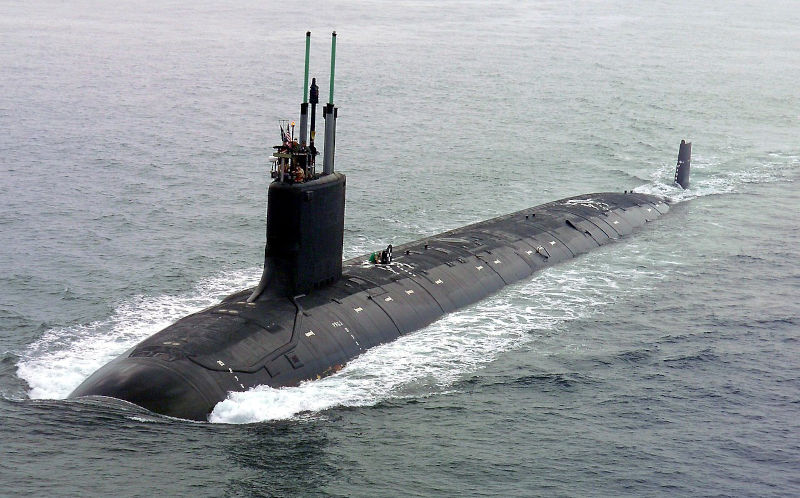
Under the current trilateral agreement, Australia is slated to acquire US Virginia-class and UK-designed SSN-AUKUS submarines powered by Highly Enriched Uranium (HEU). These reactors use weapons-grade fuel enriched to approximately 93 per cent Uranium-235. Each reactor contains between 200 and 500 kilograms of weapons-grade material, enough fissile material for dozens of nuclear weapons locked inside a single hull.
Advocates argue that HEU cores provide a “life-of-type” reactor that never requires refuelling over a 33-year operational span. However, this convenience comes at a significant strategic and civil cost: unprecedented non-proliferation precedents, heightened radiological hazards, extreme post-criticality safety liabilities and severe regulatory barriers that compound Australia’s domestic infrastructure crisis.
The non-proliferation precedent and IAEA safeguards
Transferring multi-tonne quantities of weapons-grade HEU across Australia’s planned fleet to a non-nuclear-weapon state creates a dangerous precedent in global non-proliferation architecture. Under Article 14 of Australia’s Comprehensive Safeguards Agreement with the International Atomic Energy Agency (IAEA), routine safeguards inspections are suspended while nuclear material is locked inside a military non-proscribed activity.
While Australia remains deeply committed to non-proliferation, utilising the Article 14 exemption to remove hundreds of kilograms of weapons-grade material from routine IAEA oversight creates a legal blueprint for threshold states to exploit. If other non-nuclear nations follow this precedent to withdraw enriched material from international monitoring under the guise of naval propulsion programs, global non-proliferation checks will be severely eroded.
Conversely, adopting a Low-Enriched Uranium (LEU) propulsion architecture – enriched to under 6 per cent U-235, identical to the fuel used in civil nuclear power stations – completely eliminates this proliferation liability. The French Navy (Marine Nationale) has operated LEU reactors across its submarine and surface fleets for over four decades, commencing with the CAS-48 core on the Rubis-class SSNs in 1983. Today, France relies on TechnicAtome’s 150 MW K15 LEU reactor, which currently powers 10 active operational reactors at sea across four Triomphant-class SSBNs, three active Suffren-class SSNs and the aircraft carrier Charles de Gaulle (which houses two cores). These are supported by two shore-based test and training reactors at Cadarache (the RES and its predecessor RES prototype).
Reactor physics, doppler broadening and the passive safety margin
Beyond non-proliferation, the fundamental physical properties of HEU vs. LEU cores directly shape the civil engineering demands placed on domestic shipyards. An HEU core concentrates fissionable U-235 at ultra-high power densities with minimal Uranium-238 present. Consequently, an HEU reactor lacks the natural, physical “brake” inherent in low-enriched fuels.
In an LEU reactor, the fuel consists predominantly of non-fissile U-238 (over 94 per cent). This provides a vital passive safety mechanism known in nuclear physics as Doppler broadening. In layman’s terms: as LEU fuel heats up, the atomic vibrations of U-238 cause it to act like a nuclear sponge, absorbing free neutrons before they can cause further U-235 fissions. If primary cooling fails, this negative fuel temperature coefficient acts as an immediate physical handbrake, automatically dampening the chain reaction without relying on mechanical control rods or operator intervention.
This physical distinction dramatically alters the timeline of a cooling failure emergency. Under an HEU cooling failure, the compact, high-power-density core generates intense decay heat and rapid thermal ramp-ups; if coolant circulation is lost, thermal margins erode rapidly, forcing operators into a compressed, high-stress crisis window to prevent core damage and fission product release. Conversely, under an LEU cooling failure, the lower power density and strong negative Doppler feedback transform a loss-of-coolant incident into a slow-moving event. The physical inertia of the fuel matrix buys operators a wide safety margin of 5 to 6 hours to restore cooling loops, perform emergency power cross-connections or intervene safely before fuel integrity is threatened.
Post-criticality infrastructure and the refuelling misconception
This stark difference in decay physics directly dictates waterfront infrastructure requirements. Statutory regulators, including the Australian Radiation Protection and Nuclear Safety Agency (ARPANSA) and the Australian Naval Nuclear Power Safety Regulator (ANNPSR), mandate continuous, redundantly powered shore cooling feeds and expansive, heavily fortified exclusion zones around live HEU reactors near civilian populations. If a live HEU vessel suffers a defect or failure requiring out-of-water access, it cannot be safely lifted on a shiplift or rolling hardstand without risking catastrophic loss of primary coolant.
A central justification for selecting HEU reactors is avoiding the industrial requirement to refuel submarines mid-life. However, this argument overlooks the reality of naval maintenance cycles. A nuclear submarine’s pressure hull, acoustic coatings, combat systems and mechanical auxiliaries require a major depot-level overhaul every 10 years regardless of fuel type.
France’s TechnicAtome designed the 150 MW K15 LEU reactor to align precisely with these mandatory 10-year depot maintenance windows. Refuelling an LEU reactor during a planned 10-year major overhaul is a routine, standardised procedure in French naval shipyards. By synchronising refuelling with scheduled structural overhauls, LEU submarines achieve high operational availability while avoiding the permanent hazards of housing live, lifetime HEU cores in domestic shipyards or civilian waterfronts.
Storage architecture and end-of-life HEU management
Under AUKUS agreements and the Australian Naval Nuclear Power Safety Act 2024, Australia must permanently dispose of all spent HEU fuel domestically without a return provision to the US or UK. Across eight planned submarines, this creates a sovereign liability of over three tonnes of weapons-usable U-235 embedded in spent fuel that requires isolation for millennia.
Australia does not necessarily have to replicate United States Navy (USN) practices, but the American framework illustrates the immense long-term infrastructure and security burden involved:
- USN Whole Reactor Compartment Disposal: Under the USN recycling program at Puget Sound and Hanford, entire 1,000-tonne reinforced reactor compartments are severed from hulls, sealed with heavy steel bulkheads and barged for near-surface trench burial.
- The Idaho Desert Storage Model: At the Naval Reactors Facility within the remote Idaho National Laboratory desert site, spent naval HEU cores are processed through cooling pools into heavy concrete-and-steel dry storage canisters. Because the US still lacks an operating permanent deep geological repository, these canisters sit in above-ground concrete vaults requiring continuous radiation monitoring, passive thermal heat dissipation and heavily armed federal security forces on site in perpetuity.
Replicating a comparable interim or permanent storage solution in Australia demands specialised heavy-lift marine transport, dedicated high-load overland corridors, a certified Deep Geological Repository and an expert radiological workforce, infrastructure Australia currently lacks.
The case against HEU
Persisting with HEU reactors forces Australia to build ultra-expensive, highly complex nuclear containment infrastructure at both Henderson and Osborne while navigating intense international scrutiny over IAEA safeguards and accepting unforgiving, narrow safety margins during reactor testing.
Transitioning to an LEU propulsion pathway, leveraging mature, sea-proven French designs, offers Australia a rational, sovereign mechanism to bypass domestic infrastructure logjams, eliminate proliferation risks, secure forgiving 5-to-6-hour safety margins, simplify waste management and align submarine sustainment with established nuclear industry maintenance cycles.
Read parts 1 -4:

Peter Briggs
Peter Briggs retired from the RAN in 2001 after a 40-year career, specialising in submarines. This included two submarine commands, command of the RAN Submarine Squadron, director of Submarine Policy and Warfare and Head of Submarine Capability Team, established to rectify Collins introduction into service issues. He was the president of the Submarine Institute of Australia from 2006-09 and is a frequent contributor to public debate on Australian submarine matters.